


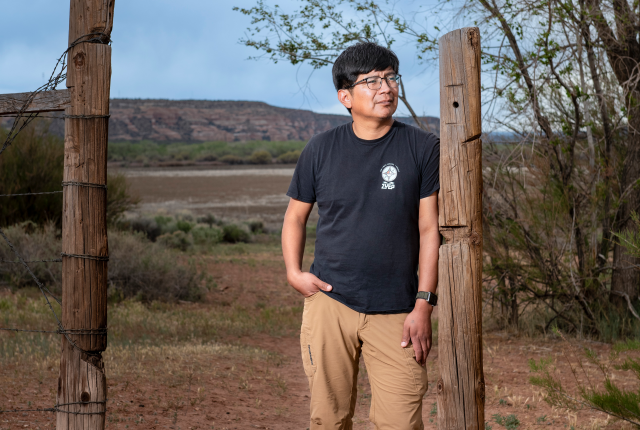
WHEN PUEBLO OF ZUNI members decided to establish a trail system, they began with what already existed, reshaping roads into trails and adding links to different parts of the community or the surrounding mountains and desert. In 2024, the nonprofit Zuni Youth Enrichment Project began teaching 18-to-22-year-olds how to steward those trails, and by extension, how to connect with and care for the land, explains Thomas Zunie, who helps lead the program. The trail network now covers about 60 miles.
We’ve been using those youth to reshape some of the trails that needed attention. Some of them used to be old roads that turned into singletrack trails—basically an old dirt road that’s kind of fading away.
On the first week of trail work, we give the youth a tour of the trails, the areas that need attention for cleaning or more work. The program gives them the feel of what it’s like working outdoors and encourages them to find other work outdoors that’s related to trail work.
We’ll make Zuni bowls [a ramp-like structure made of rocks] that will help with running water that’s causing bad erosion.
We’re teaching them the importance of keeping trails clean by removing litter. And we’re teaching them to stay on the trail. Some of the trails go through sites that are sensitive.
This year, we’ll be around Bear Trail, mainly replacing the mile markers and moving a trailhead. Some of the trails are pretty scenic. The Bear Trail is mainly near Dowa Yalanne Mountain. The Mountain Lion Trail goes on the east side of that mountain as well. The Wolf Trail is kind of leaving Zuni, going away from housing.
We see heavy traffic on those trails. After working hours or during lunch, people will go out there and use those trails.
Read more: The Cimarron Heritage Trail ties scouts, locals, and history together.