


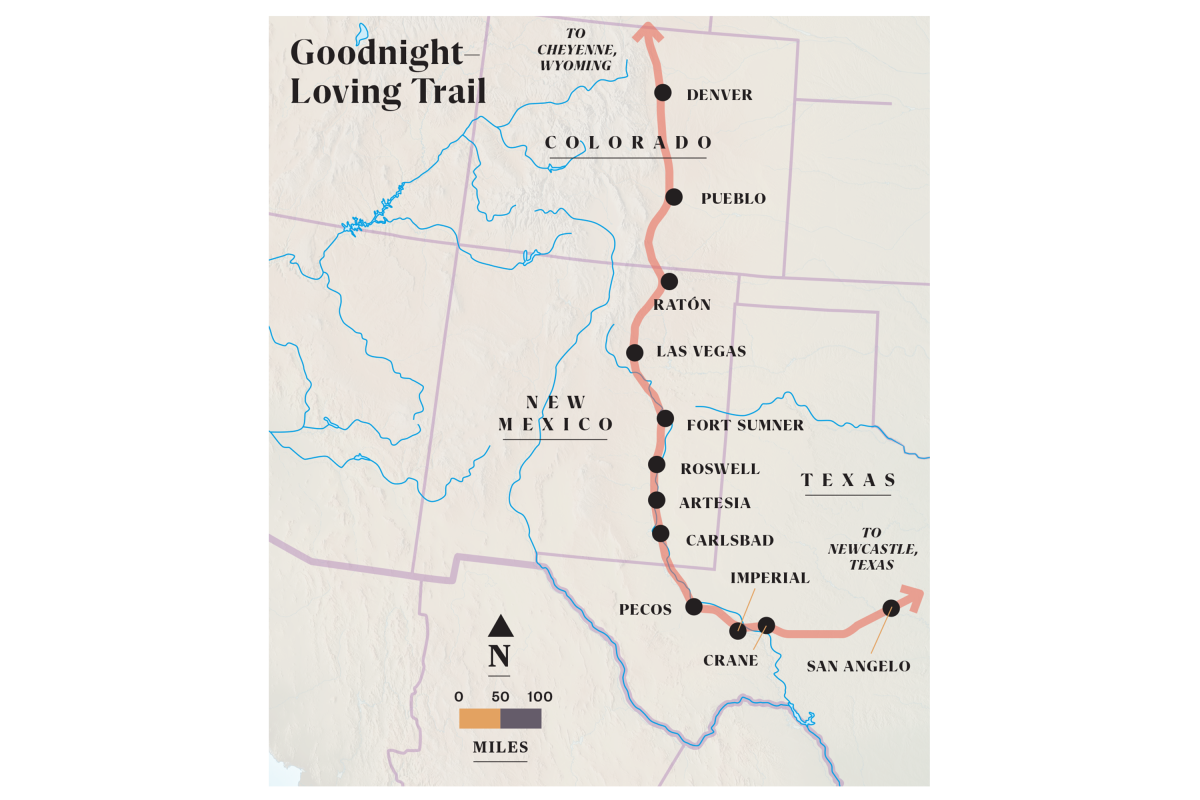
On the north edge of Carlsbad, the Living Desert Zoo & Gardens State Park tucks into the Ocotillo Hills overlooking the Pecos. The 1,500-acre park showcases a collection of plants and animal species that make the Chihuahuan Desert their home and the trail ecosystem unique.
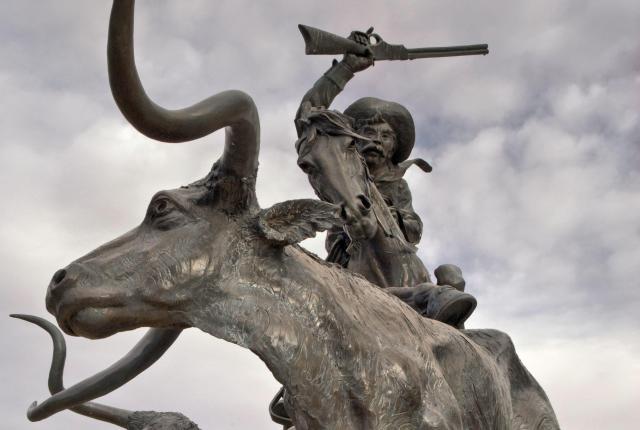
In Artesia, the spirit of the trail now stands in the shadow of the state’s largest oil refinery. On the corner of First and Main, Vic Payne’s 16-foot-tall bronze sculpture Trail Boss pays tribute to the larger-than-life figures of the trail. Frozen in a moment fraught with peril and possibility, a cowboy spurs his steed with a rifle raised overhead as two massive longhorns charge ahead.
A marker details some of the challenges of the 40-day trip along the trail: “Many lost their lives or their herds or horses to thirst, alkali poisoning, quicksand, drowning, floods, stampedes or Indian raids.” Eight other markers within walking distance are dedicated to the city’s frontier history.
About two hours north by car sits Fort Sumner, the military headquarters for Bosque Redondo, where approximately 9,500 Navajo and Mescalero Apache people were forcibly interned by the U.S. government. Due to poor planning, graft, and extreme cruelty, the Native Americans held there were starving. “If it had not been for the cattle industry, they would not have had food to eat,” says Aaron Roth, Bosque Redondo Memorial regional manager.
The memorial details the shameful history of internment through stories and artifacts from the people who endured the famine and disease they found there, but also the role that the cattle trail played in keeping so many alive. Take a moment to walk the path down from the main building to the Pecos River, where the cattle driven there once watered.
Next door to the Bosque Redondo Memorial, the Fort Sumner Heritage Center opens a new permanent exhibition in July. At the Crossroads of History details De Baca County’s past and delves further into the importance the trail, the cowboys, and the cattle industry itself played in creating the community that developed there.
Considered a great success, Goodnight returned to Texas after that first trip with $12,000 in gold to buy more cattle and plan another drive to the fort. Subsequent journeys expanded through the Ratón Pass into Colorado and Wyoming until railroads and barbed wire changed ranching—and the West—forever. Or as Goodnight plainly said, “The cowboy of the old days is the most misunderstood man on earth.” Today, traveling the trail offers us an opportunity to relive, remember, and reconsider the complex history of the West, and maybe even our own place in it.