


IN SOME WAYS, it was a strange choice for these politically active twentysomethings to settle in Petaca: The town was home to about 50 very traditional Hispano Catholic families with roots in the area going back well over a hundred years. At the time, Petaca had no schools, no hospital, no stoplights; it had one church, one bar, one dry-goods store, and a single gas pump. Spanish was nearly everyone’s first language, and the only real employment for locals had been a mineral mine, but that had shut down in the ’50s. The nearby sawmill had laid off many of its workers. In Petaca, most families got by as subsistence farmers, with a few animals and small gardens in which they grew corn, chiles, tomatoes, and beans. Summers were scorching and winters bit hard, but if you were set on living off the grid, Petaca seemed as good a place as any.
Lynn Adler was not a trained photographer; she just wanted to take pictures of her friends making their way in this remote world. But her instinct for seeing the collision of cultures, along with her savant’s eye for constructing beautiful frames, captured a moment both rare and spectacular. Her photographs, now 50 years old, show her friends deep in the hard work of homesteading and raising families; they show the locals tending their crops and looking after their animals; they show the moments when members of both groups came together.
You could say that Adler’s big-hearted, intimate pictures tell a fish-out-of-water story, and that would be true. But they also tell the story of a moment when soaring ’70s idealism met an earthy protectionism, when activism rubbed up against a quiet fear of land loss and gentrification. Adler’s friends had big dreams—they planned to build their own homes, grow their own food, start a newspaper, maybe even construct a school—but despite their best efforts, they were still considered outsiders at a time when outsiders seemed to pose a threat.
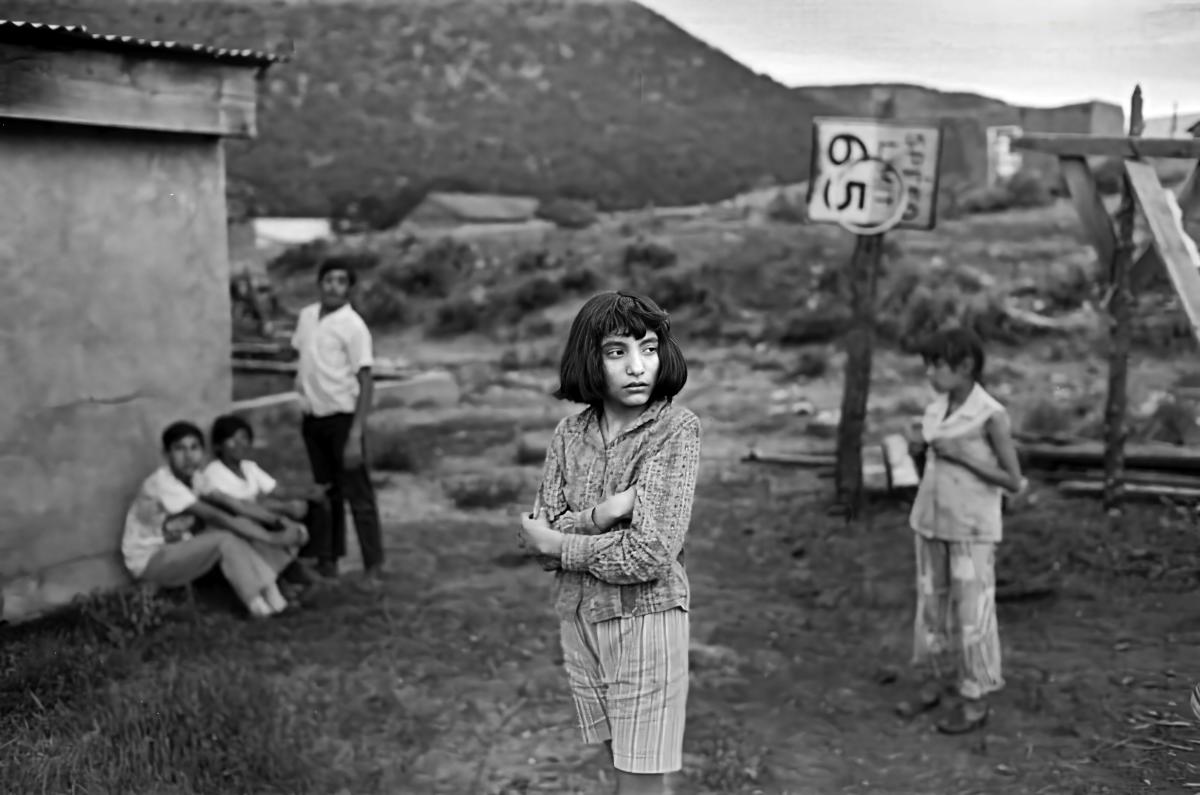
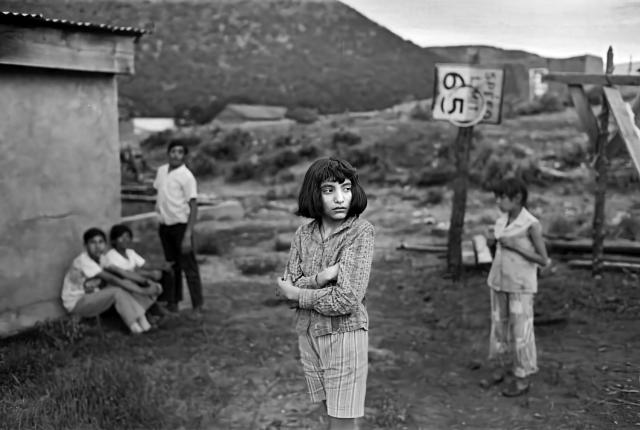
LOUELLA TORREZ GUTIERREZ
Louella, pictured here in the foreground, was sort of the leader of Petaca’s pack of kids. She had serious charisma. Her face always struck me as being extremely expressive, and I liked watching her—with and without my camera. She wasn’t shy about hanging out with my friends and playing with their young kids, and I remember that she loved dogs. I later learned that she married Flaviano Gutierrez, a Petaca native, had two kids, and moved to nearby Ojo Caliente. She worked at Los Alamos National Labs for 15 years and passed away in 2021.
For a few years, everyone got along. The well-intentioned but somewhat bumbling gringos respected the local culture and accepted advice (and hands-on help) from the town elders, played with the local children, did what they could to fit in. But in the end, Adler’s friends were forced to leave Petaca. There was no time for goodbyes or final photos. A chapter closed as quickly and unexpectedly as it had begun.
It’s been half a century since Adler last looked through her viewfinder at Petaca and pressed the shutter. Today, the town is even smaller than it was in the early ’70s, its population hovering in the mid-double digits. The hand-painted signs in her photos have been painted over. The children who ran through her pictures are now deep into middle age if they haven’t already passed. The old people are gone. In a community as poor as Petaca, it’s unlikely that anyone else had a professional-quality camera; if Adler hadn’t brought hers to Petaca, if she hadn’t carried it around town and made pictures when the spirit moved her, this fleeting moment would have been lost to time, and this story of community and conflict would never have been remembered, let alone told.
A few years ago, when word got out that Adler had pictures of the town in the early ’70s, she received a handful of notes. “I know the people in the pictures,” one woman wrote. “Very touching to see all the ones who are no longer with us,” said another. And one message read, “I’m the great-granddaughter of Jesusita Martinez. These are the only pictures of her I will have. I’m so glad you photographed her.”
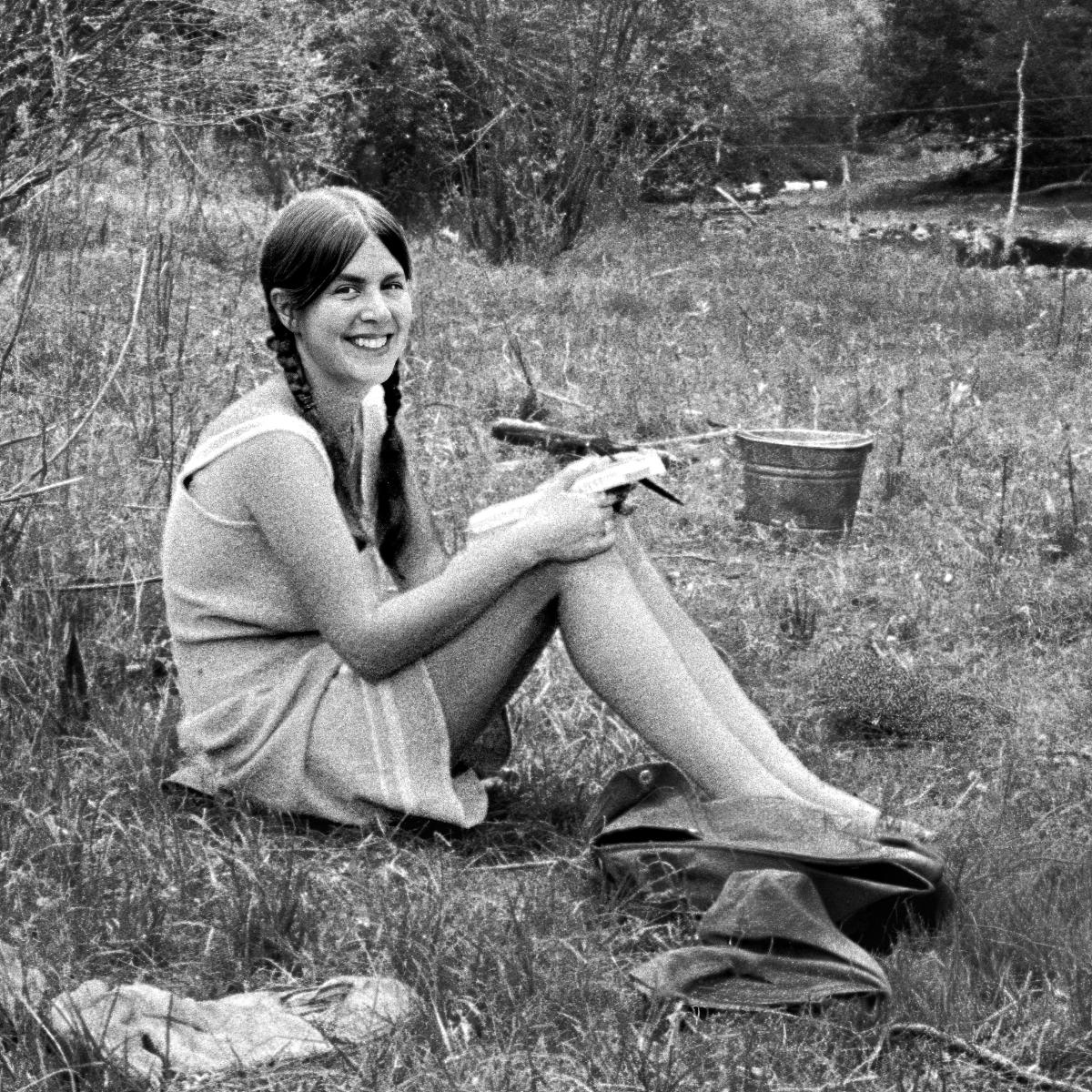
PHOTOGRAPHER LYNN ADLER IN PETACA, CIRCA 1971
I wasn’t thinking about making a book. Nothing like that. I was just taking pictures of my friends in this strange new environment. But I found that approaching the locals with my camera made it easier for me to engage with them and brought me closer to them. And that’s really what I was interested in at that point, much more than taking a good picture.
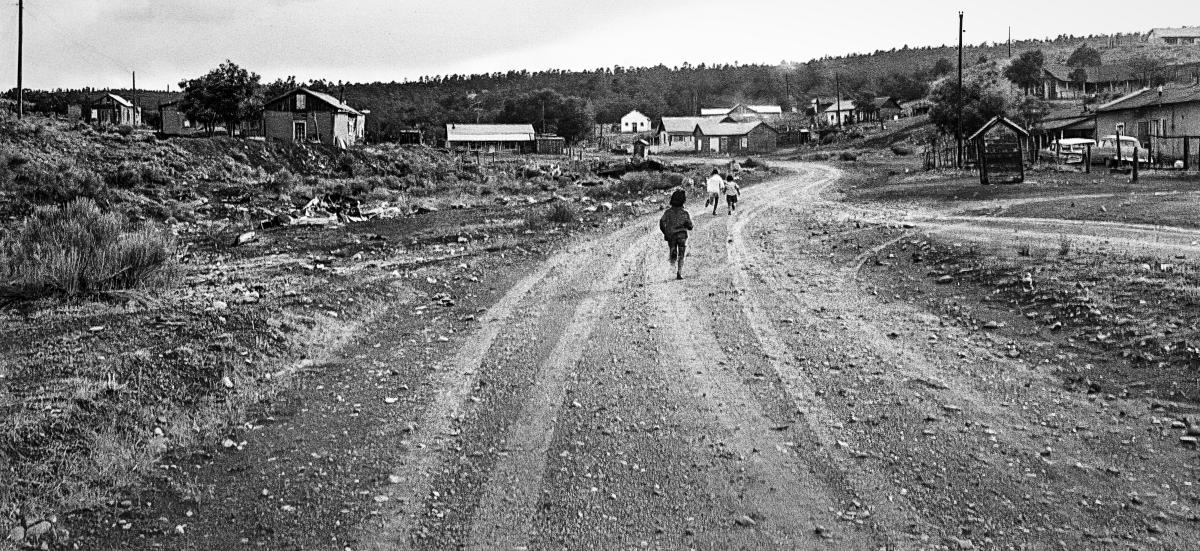
ENTERING PETACA
I remember driving there but having no idea where, exactly, I was going, and not being sure I’d ever make it, because Petaca was barely on the map. Eventually I found the forest service road, which seemed to go on forever. But at some point I saw a group of kids—maybe 10 or 12 years old—playing in the road. I slowed down and asked them, “Do you know where Petaca is?” I remember they just laughed and said, “You’re in Petaca.”
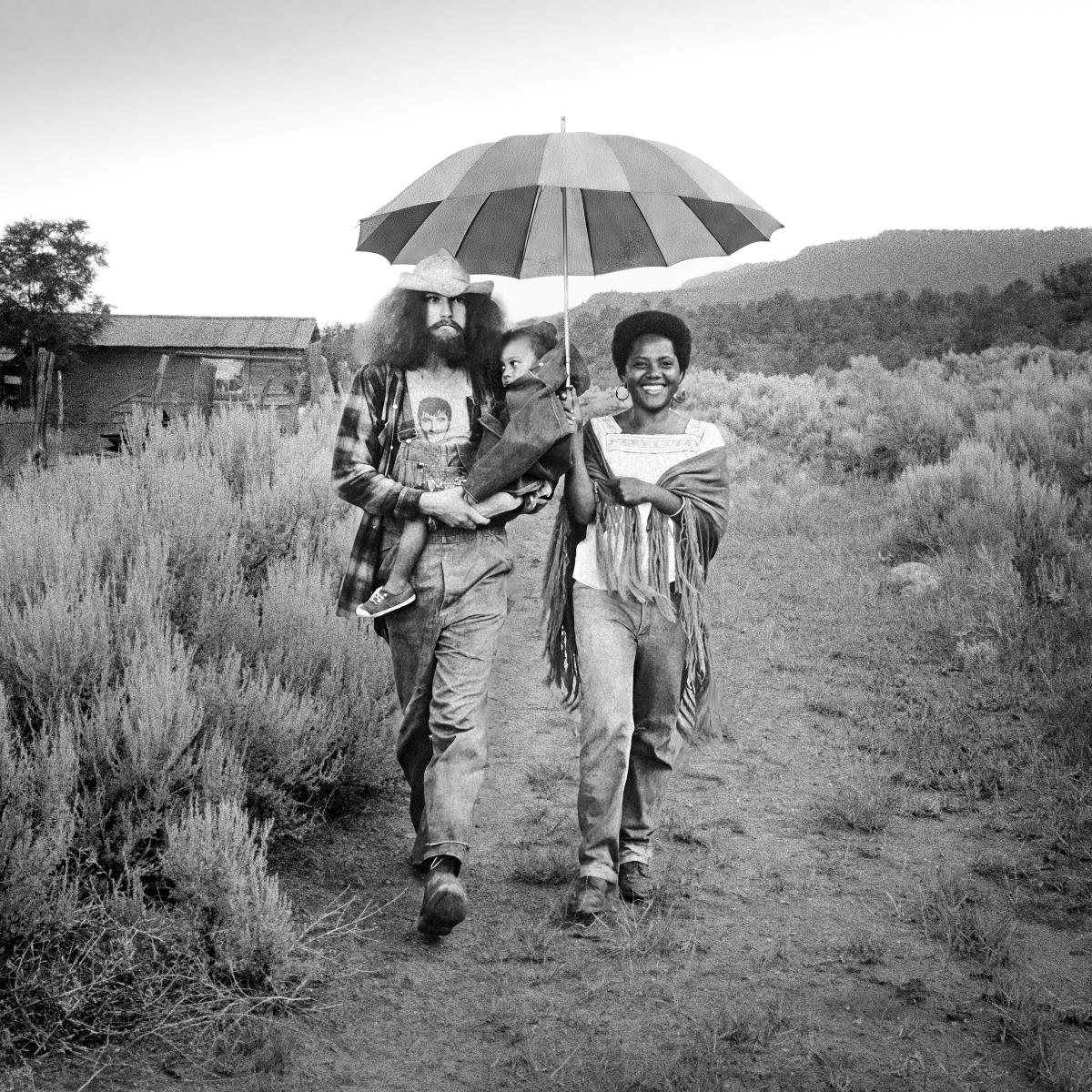
UNDER THE UMBRELLA
With friend Gary Sullivan, Claudia King Yunker and her daughter, Maya, are shaded from the summer sun. As a single Black mother in a remote Hispano village, Claudia stood out, but she became good friends with the other young mothers in town. After Petaca, she and Maya moved to the town of Chamisal, where Claudia eventually married a local Anglo, built an adobe house, and had two sons. Claudia once told me that she never wanted to leave New Mexico, and she didn’t: She lived out her life on the land until she died in 2023.
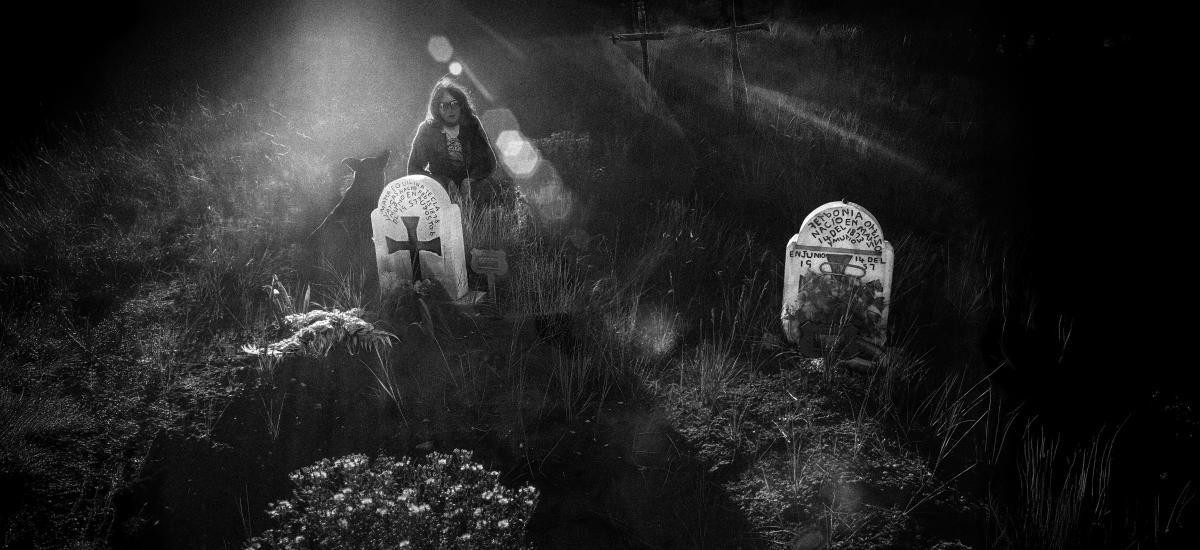
GLORIA GREENHUT
Gloria, pictured among the tombstones of Petaca, was in her early twenties when she and Marty piled into their car and drove to Petaca. Homesteading in an off-the-grid community where not everyone spoke English took both persistence and resilience. As Marty began building a simple home, Gloria focused on the garden they hoped would supply much of their food. The trouble was, Gloria had been raised in New York City and knew exactly nothing about raising crops. She made up for her lack of experience with energy and enthusiasm, asking the locals about the best crops to plant.
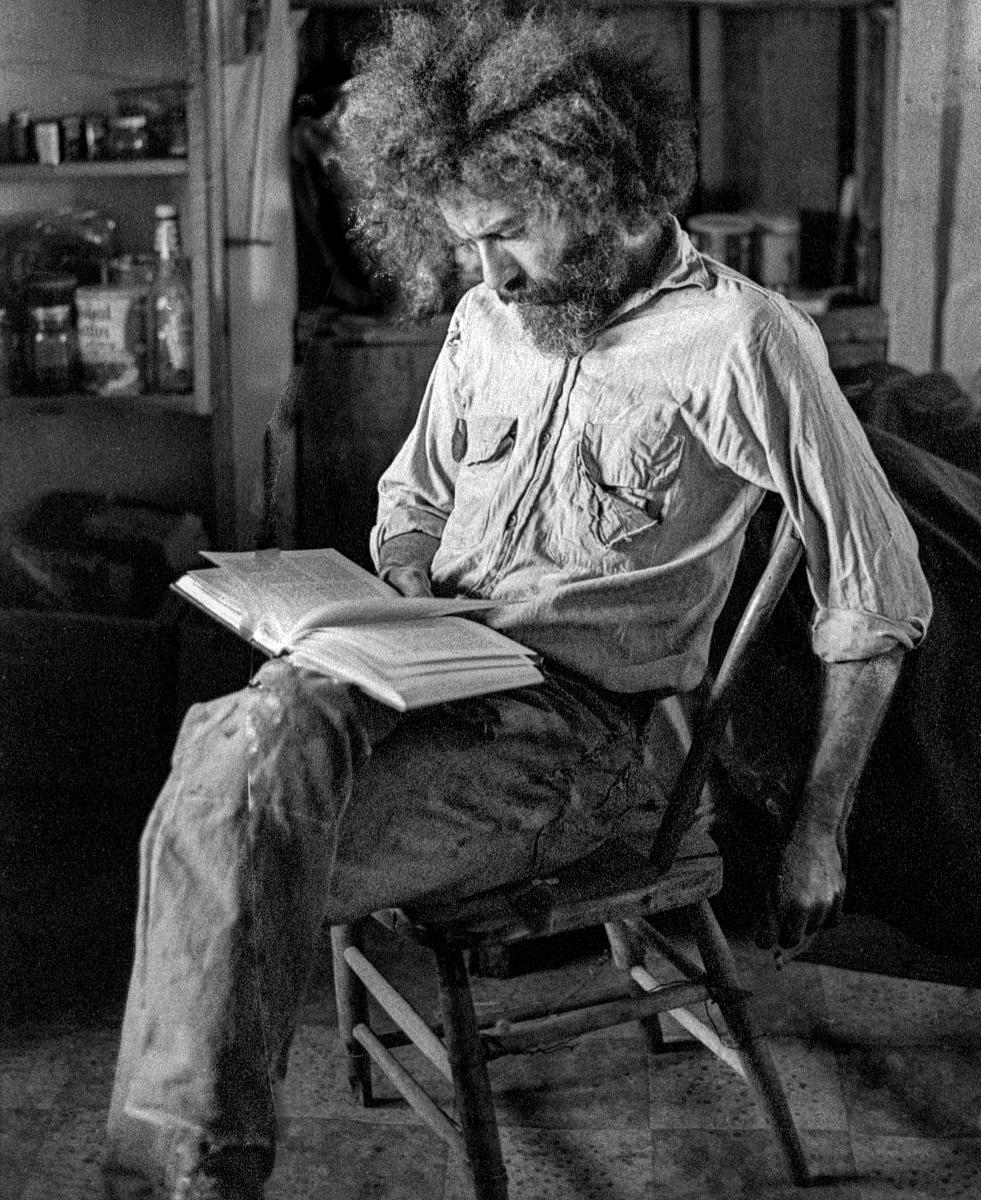
MARTY GREENHUT
In San Francisco, Marty and Gloria met people involved in the back to the land movement. Inspired, they left the city for rural northern New Mexico. In moving to Petaca, they wanted to connect with the locals and learn how to survive away from the turmoil of urban life. They wore their hair long but rejected the term “hippie”; instead, they called themselves “urban activists.” Here, Marty peruses The Horsedrawn Ploughing Handbook.
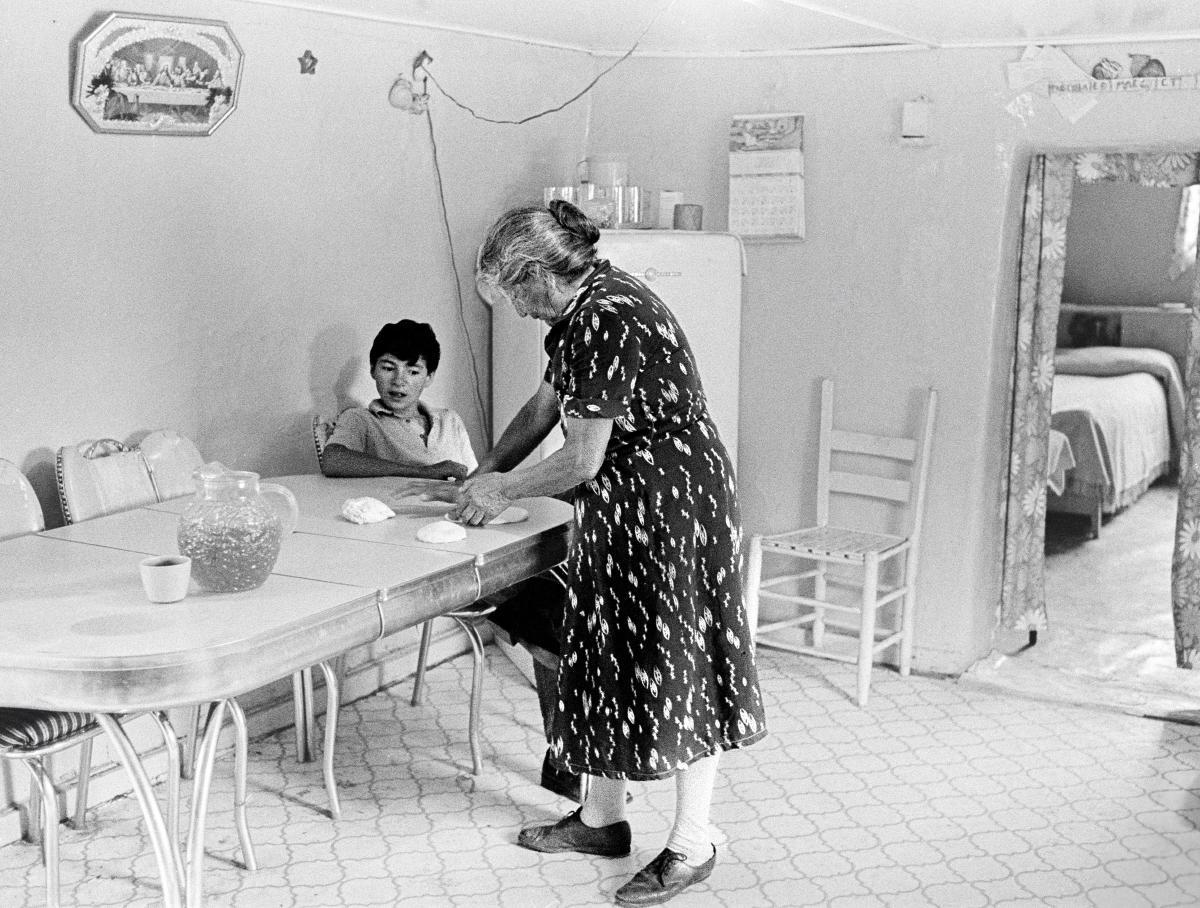
EUPHEMIA TORRES MAKING TORTILLAS
Euphemia liked to tell us about the old days in Petaca: “Sabes, we used to have a clínica here, but no más. We had places to work, like the old lumber mill in La Madera, pero no existe ahora.” In fact, none of the local mills or factories existed anymore.
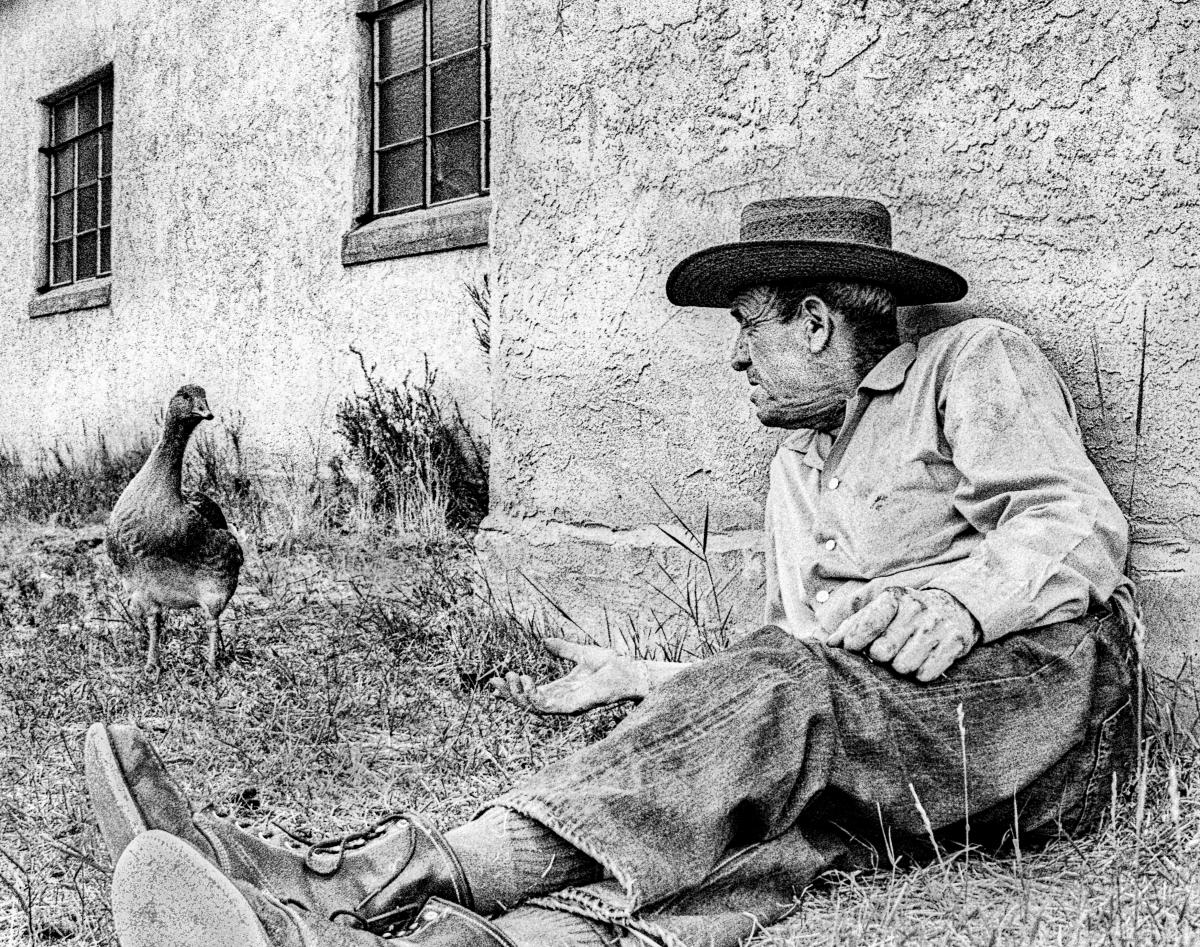
SANTIAGO ROYBAL AND HIS GOOSE, LUGAR
Santiago’s ancestors helped settle Petaca in the 1860s. Santiago, a rancher, was very respected in the community and was often called to settle land disputes. He and the others welcomed my friends, but he also wanted me to know that there was an underlying fear of losing more of their land to the Anglos. His pet goose, Lugar, had a habit of nipping people’s legs.
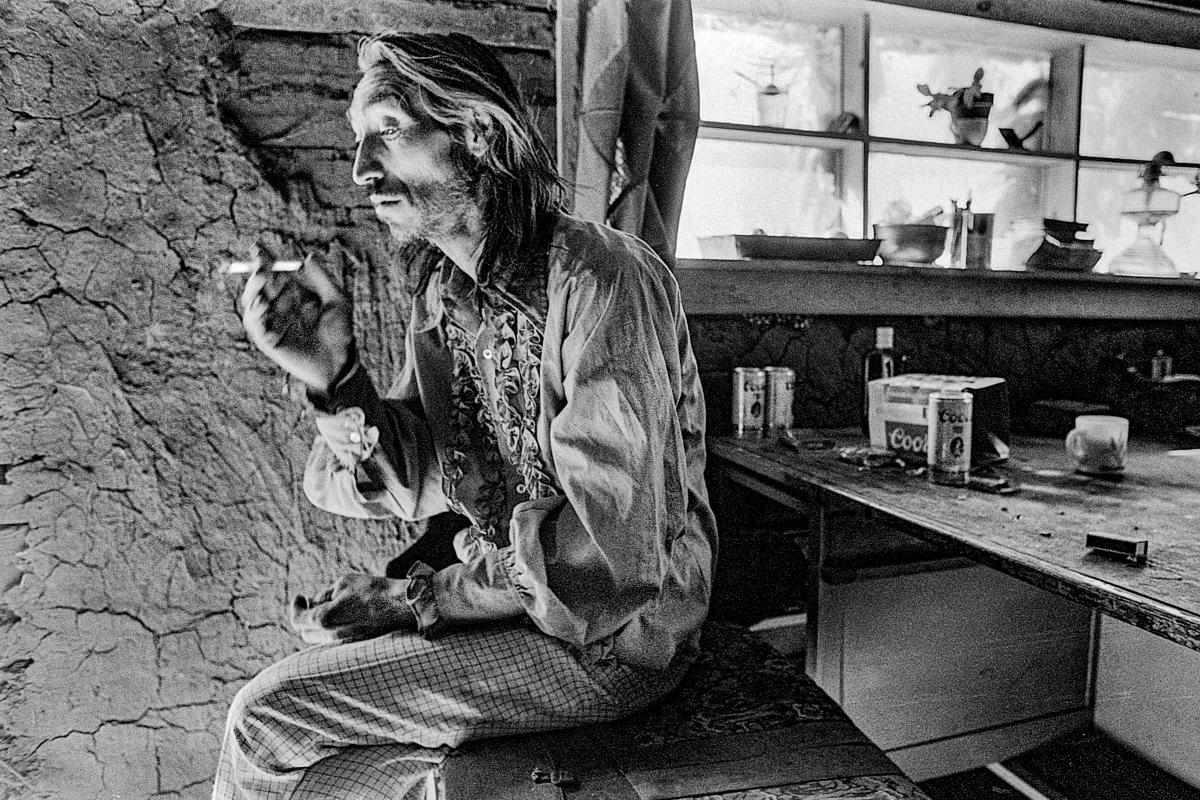
ELMO LIDO
Elmo was easy to spot. He had long hair—not common for Hispanos in this traditional town—and often dressed like he’d just come from Haight Street, with paisley or ruffled shirts and cool-patterned pants. Even though he was much older than we were—I’m guessing he was in his late fifties—he came by to visit with us often, to hang out and to drink beer. He was incredibly friendly, incredibly kind, but there was a certain sadness about him. Like many other men in town, he’d lost his job when the sawmill in nearby Vallecitos shut down.
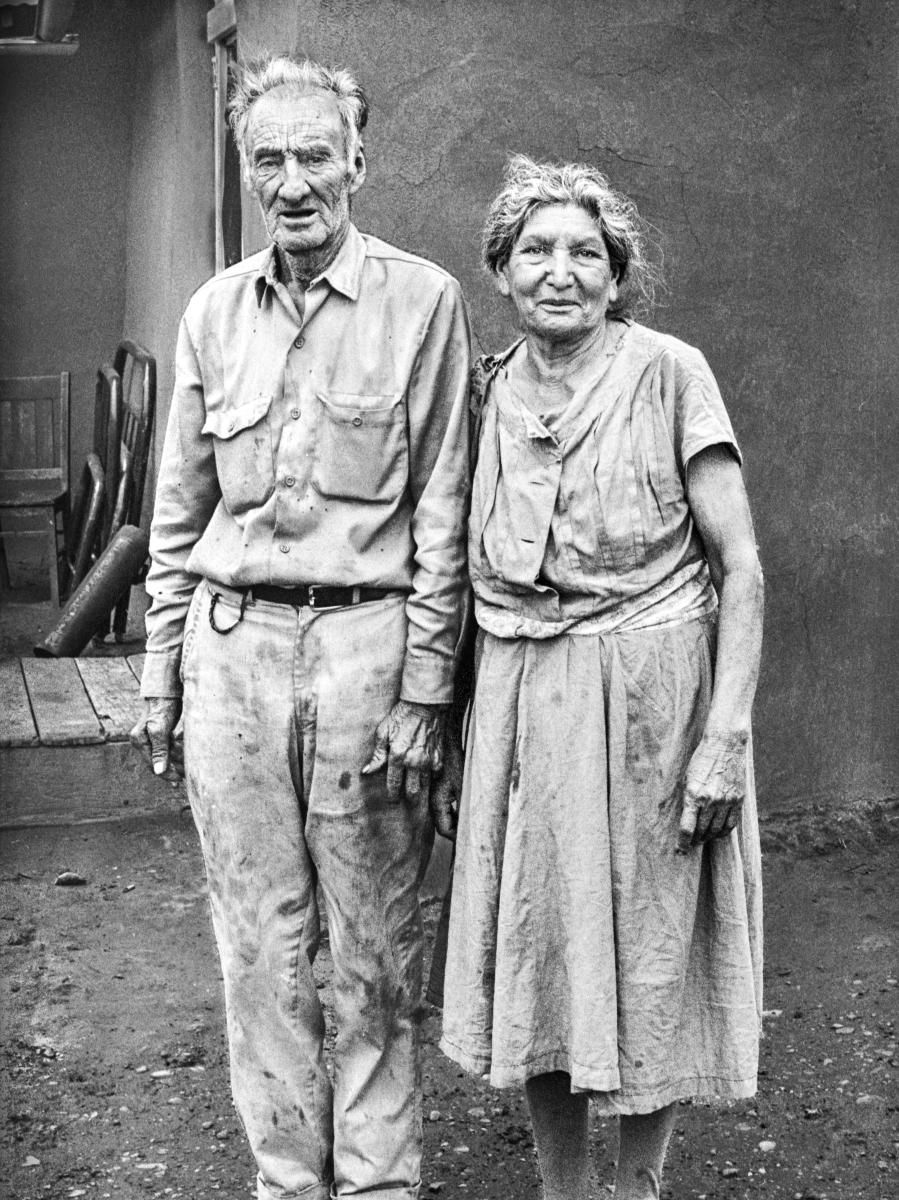
EUPHEMIA AND MAX TORRES
Euphemia and Max lived near the center of town. She was warm, engaging, and always kind to the newcomers. From time to time, her husband, Max, would drop by and offer to lend a skilled hand. Like nearly everyone else in town, the couple was befuddled by the fact that these city Anglos would actually move, on their own accord, to Petaca.
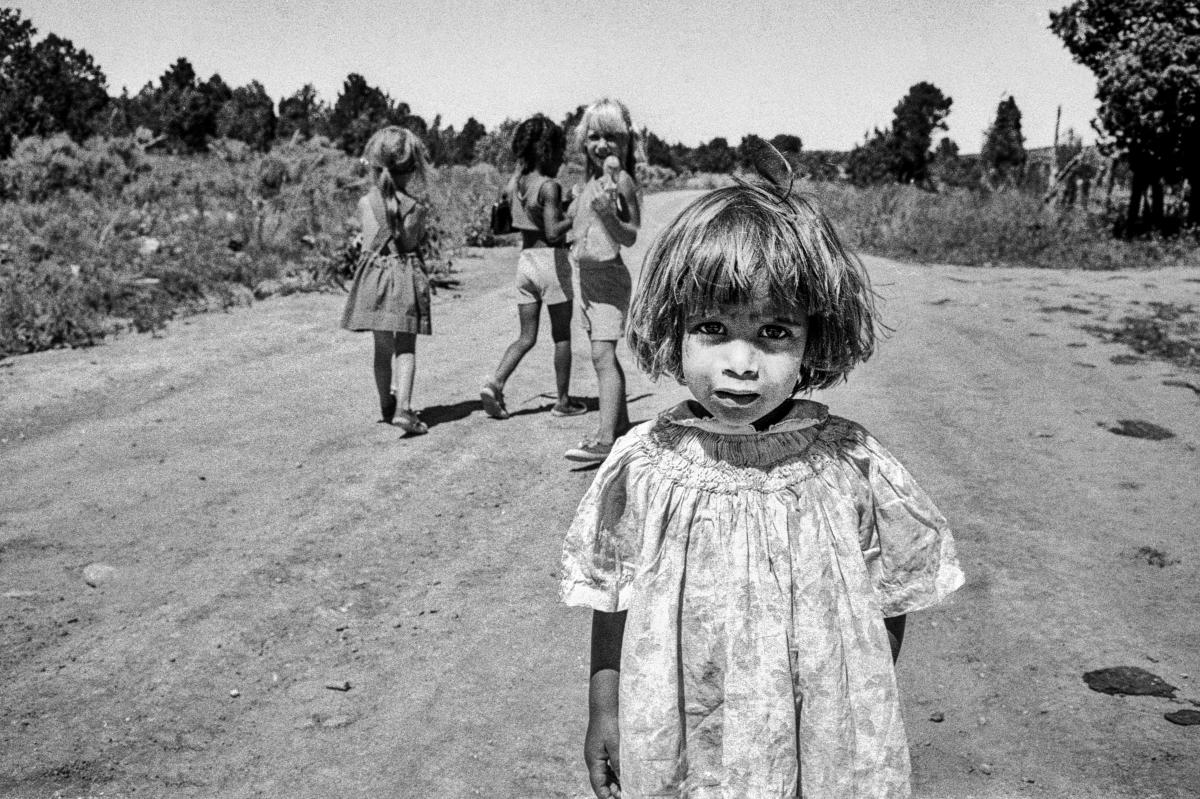
CHILDREN OF PETACA
Perhaps no one was more fascinated with the strange, wild-haired gringos than Petaca’s many children. I was often there in the summer, when school was out and the kids ran around making their own fun, wandering freely. The gringos became their focus and their entertainment. They were endlessly curious about where we came from and had concocted fantastical ideas about our lives before Petaca.
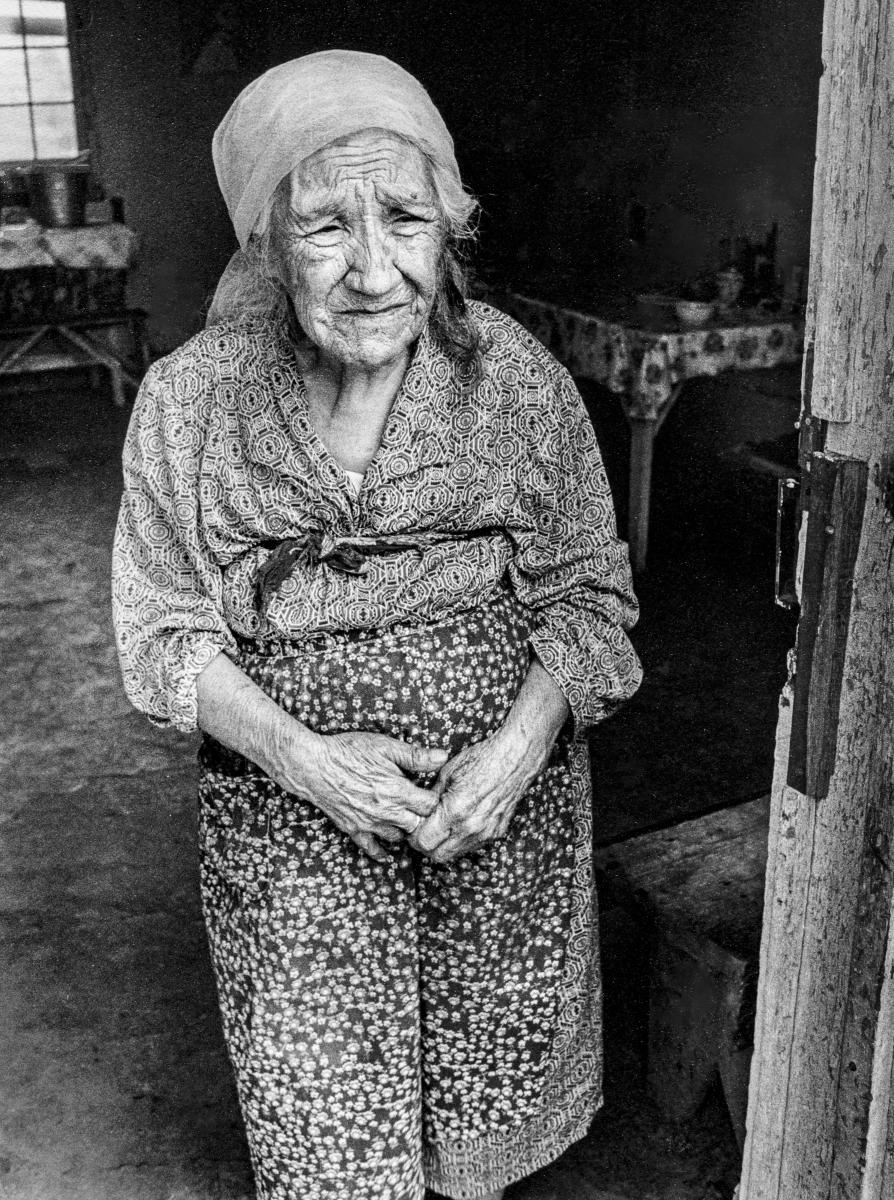
JESUSITA MARTINEZ
Born in 1886, Jesusita was Petaca’s curandera, or healer, a small, frail-looking woman who appeared to be in her eighties. She lived by herself near the town’s only public well. I would often see her standing in her doorway, and one day I asked if she would mind if I took her picture. She was genuinely shocked by my request. “Why would anyone want a picture of an old woman?” she asked. “You have a wonderful face,” I told her, which was true. She found this deeply amusing. Her door was always open to the young newcomers looking for advice, and I remember sitting in her home listening to her many stories.
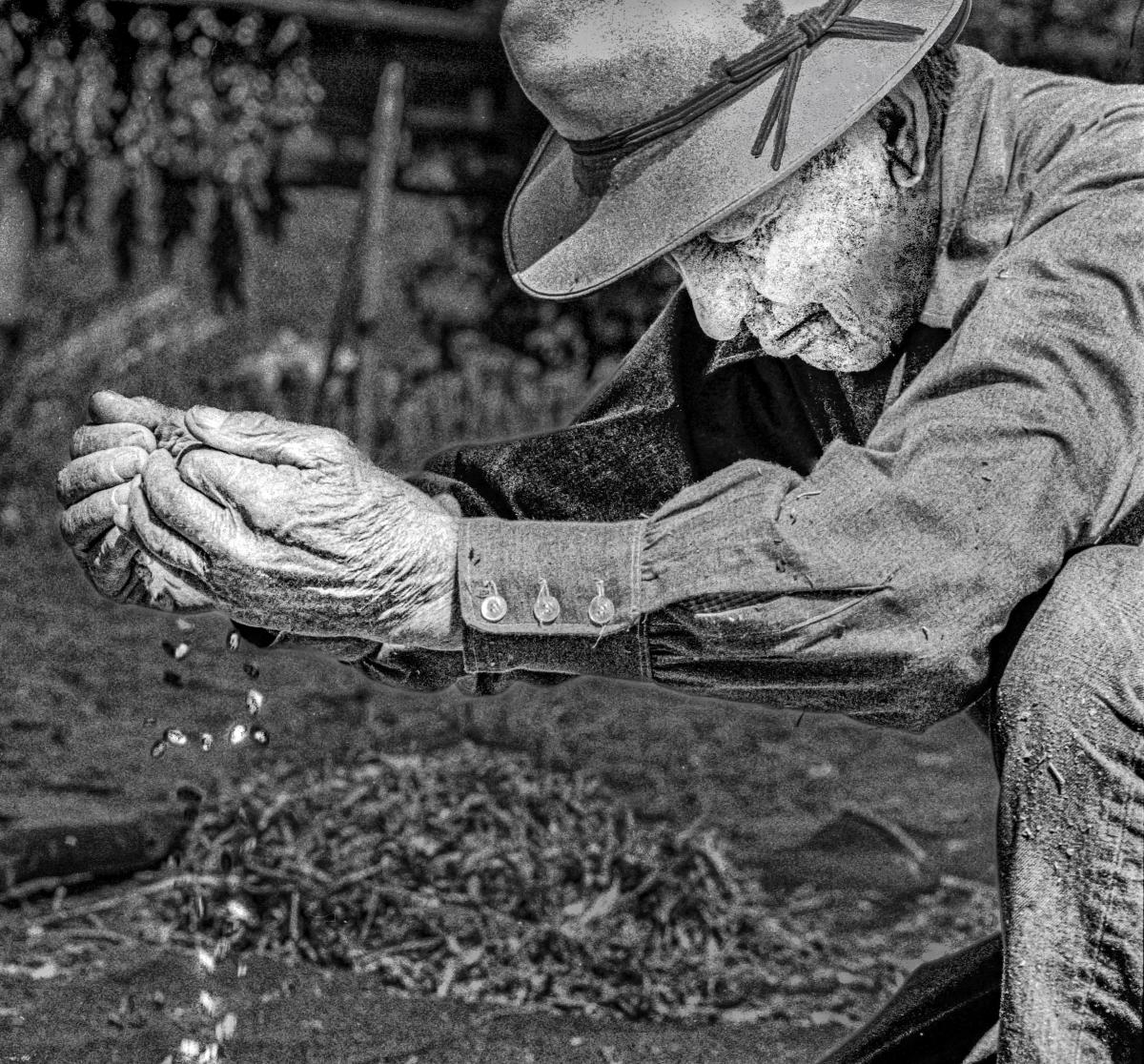
THEODORO MARTINEZ EXAMINING HIS BEANS
When I first met Theodoro, I was walking by his weathered home with my friends Marty and Gloria as he was harvesting beans in the backyard. “Do you want to help?” he asked. “I am sure you have never seen this way of harvesting, but you need to know how we do things here.” We said yes, of course, and, following Theodoro’s lead, began to sort and spread the beans on the ground, which he then carried into his home and laid out to dry on his bed.
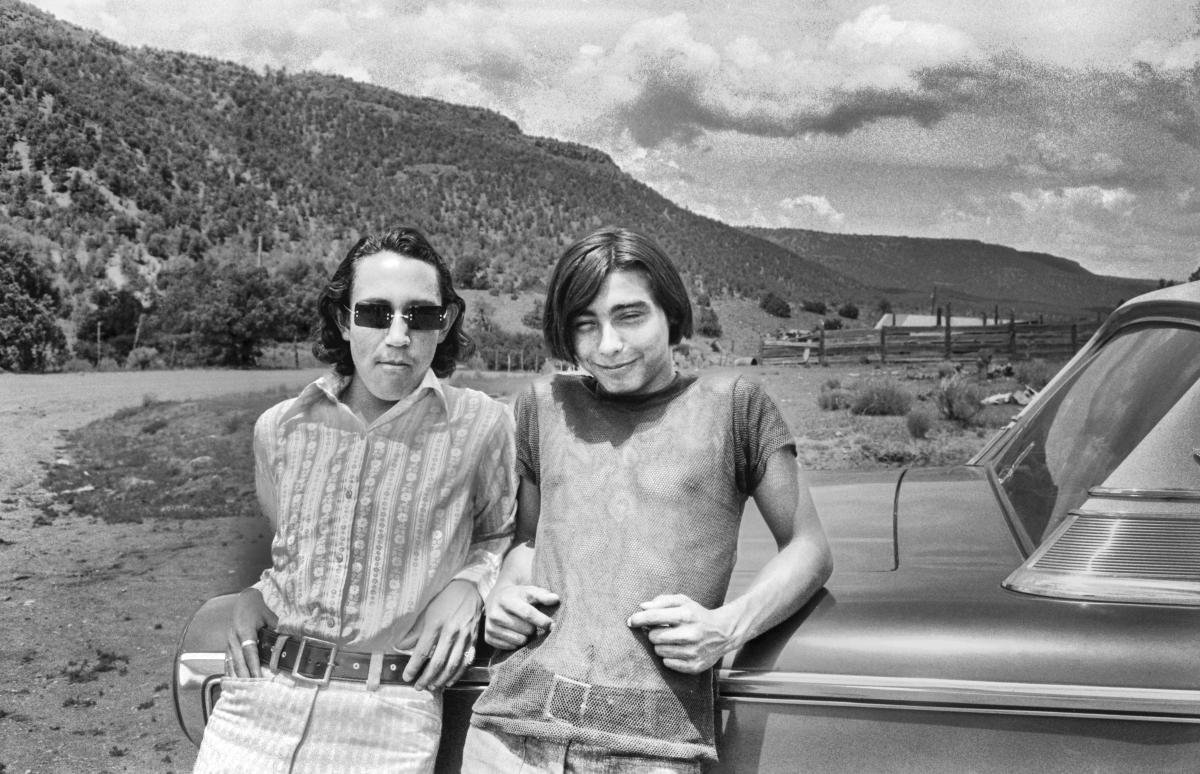
GERALD ESQUIVEL AND BILLY CISNEROS
When they weren’t driving their beloved late-model cars up and down the dirt roads, Gerald and Billy were usually parked and hanging out inside them. Sometimes the two teens would take the Anglos to their secret spots, like to the waterfall that seemed to appear as if by magic after hiking through fields of sage or to the top of the nearby mesa with its sweeping views.
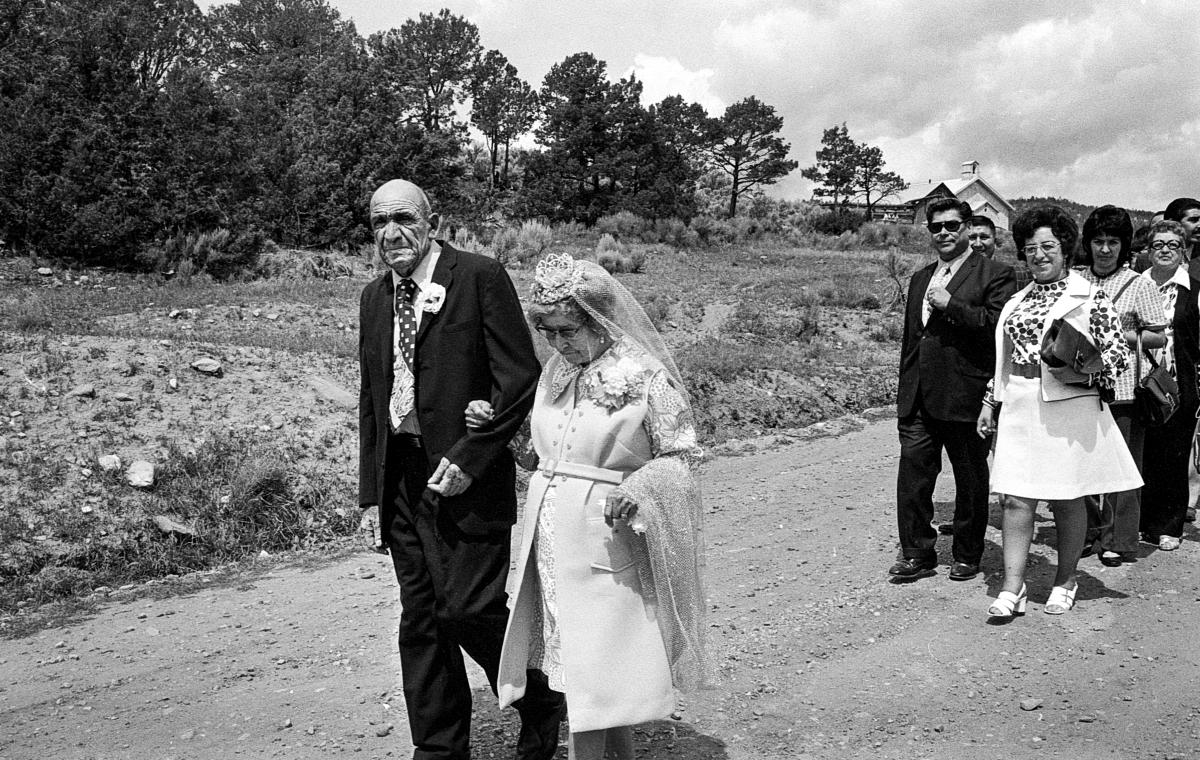
SANTIAGO AND MARIA ROYBAL
Santiago and Maria lived in a small adobe home in the center of town. From their porch, they could see everyone in town coming and going. Like most of the women in this traditional town, Maria was a skilled cook, and she worried that the young Anglos weren’t getting enough to eat. “These kids are too flaco,” she once said to me, using the Spanish word for skinny, as she prepared enchiladas. Another time, I remember her showing us her tricks for making breakfast burritos. On their 50th wedding anniversary, they renewed their vows with a procession through town.
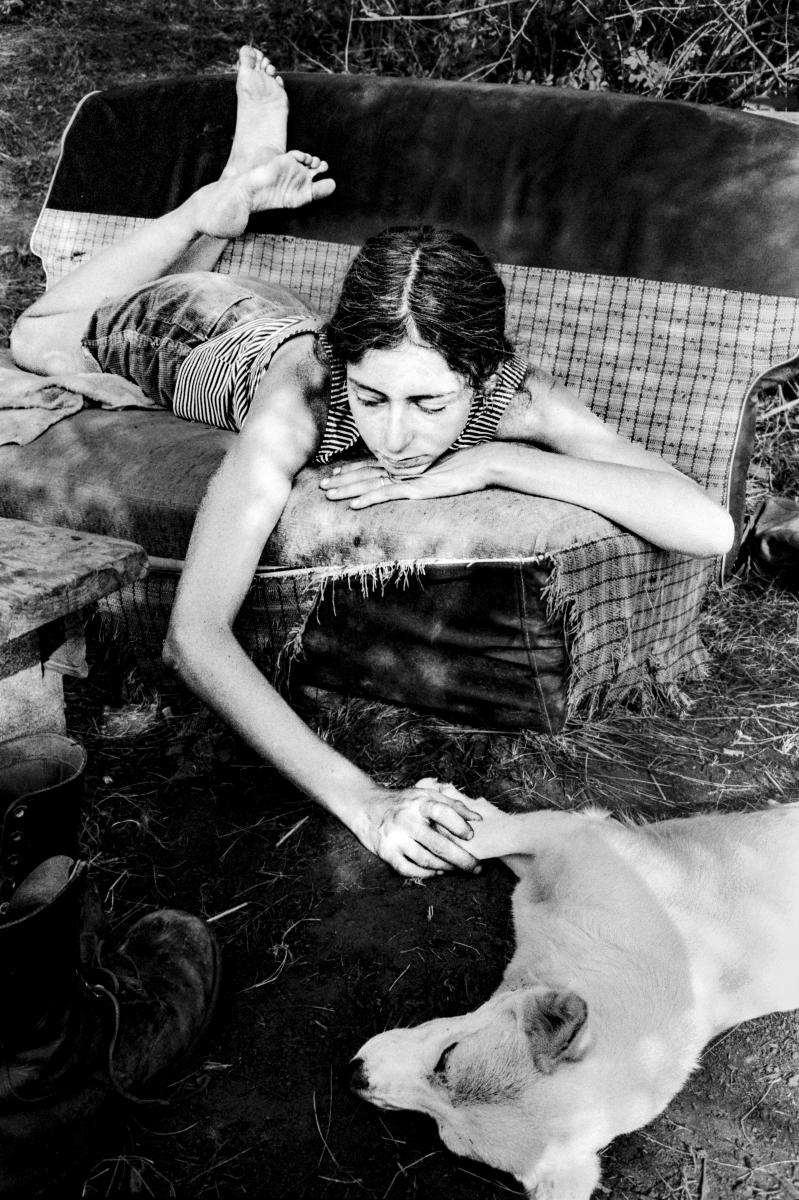
GLORIA GREENHUT RESTING WITH HER FAVORITE DOG
The old tractor Marty and Gloria bought fell apart, their ancient plow horse couldn’t really plow, the fence that was meant to keep out the predatory animals was always in disrepair, but Gloria never got discouraged. And in the end, she successfully learned how to can beets for winter and bake bread in a horno.
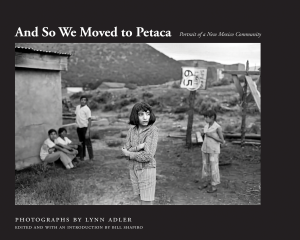 And So We Moved to Petaca: Portrait of a New Mexico Community, photographs by Lynn Adler; edited and with an introduction by Bill Shapiro, is published by University of New Mexico Press on June 30 and available at nmmag.us/petaca. On May 29, the Obscura Gallery, in Santa Fe, hosts an opening and book signing for the exhibition of Adler’s Petaca images; find out more at obscuragallery.net.