IT’S A MOONLESS winter evening, cold enough to have the heat cranking in the car, when I make a wrong turn in what suddenly feels like the middle of nowhere. Pausing, unsure, I exchange wide-eyed stares with a cottontail. Prairie Star Restaurant may only be five minutes from the highway, but it feels much farther, tucked into the protected open space of historic Santa Ana Pueblo and isolated from the bustle of NM 550.
Backtracking, I find the turn I’d missed. The restaurant was expertly sited more than 100 years ago, when it was built as a traditional adobe homestead. Overlooking the Río Grande bosque, not far from the painted kiva murals of Coronado Historic Site, you forget that the Albuquerque suburbs have crept all the way out here. Pulling up, a glowing luminaria-lined path leads us inside, where it’s warm and cozy, with beautiful viga-and-latilla ceilings and graceful beehive fireplaces.
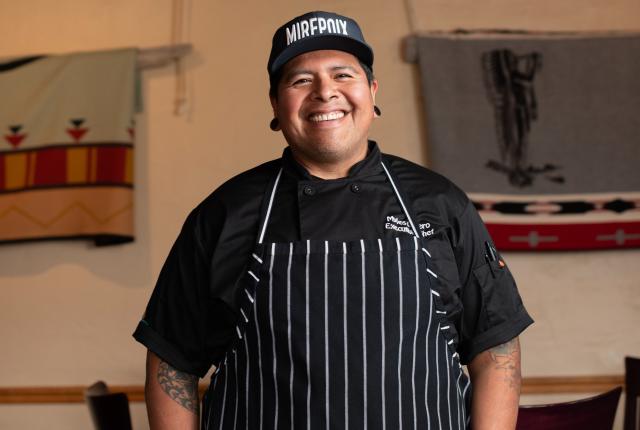
But it’s not just a pretty place. The pueblo-run fine-dining restaurant features a chef who’s passionate about local agriculture. We’re offered the standard restaurant menu but we’re here for the adventure of the Wine & Dine prix fixe dinner, offered only on Wednesdays and Thursdays. For $89, two people get at least three courses and a bottle of wine, which is perfect for two gals with a midweek standing dinner date and a preference for small plates and big glasses. For chef Myles Lucero, who has helmed Prairie Star for seven years, the prix fixe dinners allow him to offer more seasonal variety in between menu changes—and to have some fun.
Prairie Star’s 100-year-old adobe dining room.
My BFF and I have managed to score a table next to one of the giant bay windows, and swirling the pinot gris in my glass, I marvel at how little the view must have changed over the last century. Santa Ana and Sandia pueblos have preserved much of the open space between here and the granite slabs of the Sandía Mountains. The only choices we have to make tonight are for the entree—and we’ve agreed to order both and share.
Lucero has family from Santa Clara Pueblo and grew up on Isleta Pueblo, where his family raised animals and planted corn, beans, and squash. But his dad also threw in some wild cards, like okra, eggplant, brussels sprouts, and cucumbers. “I don’t feel like those are common things for growing up on the reservation,” the chef says with a chuckle. That connection to farming shaped his taste and influences for what he grows in his own garden now (tepary beans, family heirloom varieties of chile) and what goes on his menus.
The chef likes to buy locally raised meats, and he’s always keen to incorporate produce grown by tribal members with offerings like green chile or apples. “I like to invite them in and let them see how we used it,” he says. “That’s my thanks.” Last summer, one former Santa Ana Pueblo governor brought in a giant crate of fresh basil that Lucero turned into vats of pesto. The recent donor of a sack of pomegranates would have been pleased to see the fall Wine & Dine menu, which paired a Basque cheesecake with green chile apple compote and local pomegranate arils.
The restaurant’s Santa Ana Pueblo location offers a respite from city bustle.
Lucero’s team includes members from Zia, San Felipe, and Santo Domingo pueblos, and that representation matters to him. “There’s not a lot of Native chefs,” he says, “but I see some others out there, and I think it’s great.”
He’s happy to be in an unusual position where his bosses, the directors of the Santa Ana Golf Club, are tribal members whose priorities are different from regular restaurant owners. Prairie Star and Corn Maiden, its sister restaurant at the Hyatt Regency Tamaya Resort & Spa down the road, are points of pride for the pueblo, places tribal members enjoy that also demonstrate the pueblo’s culinary prowess.
Lucero says he feels both respected and nurtured by his team. Every year the board takes him to Chicago for the National Restaurant Association Show, an adventure he relishes. And they’re delighted by the rabbit tamales and red chile bison posole he serves when they host the regional Notah Begay III Junior Golf National Championship, founded by former professional golfer Notah Begay III (Diné/San Felipe/Isleta), whose foundation supports Indigenous youth. “They’re interested in the business,” Lucero says, “but it’s not just ‘How are we doing monetarily?’ They ask me, ‘Are you taking time off? Are you taking care of yourself?’” This year the team forced him to take more vacation time, because they said they were worried about him burning out.
A roasted red beet salad keeps it fresh.
In the kitchen, Lucero thinks of himself primarily as a curious cook who’s hungry for adventure but still appreciates tradition and comfort. He loves traditional Pueblo ingredients and recipes but says he doesn’t want to be put in a box and labeled a “Native chef.” He wants the freedom to cook whatever he finds interesting, challenging, and fun. In his early days, he says, maybe he was trying too hard, making things too complicated. But he’s dialed that back a bit. “I like to keep it seasonal, flavor forward, and uncomplicated,” he says.
The curry-spiked carrot-coconut soup that opens my meal is a perfectly smooth puree of carrot enriched with coconut milk, then explodes with fiery Thai curry. A warm zucchini salad with goat cheese and a red-chile-sesame vinaigrette reminds me of a classic Italian dish kicked up with New Mexico fire and then turned radically global with Asian sesame. After that, a prosciutto-wrapped monkfish over apricot wild rice pilaf and roasted vegetable-saffron puree feels like a cruise departing from Canada and stopping in Spain, Italy, and Morocco. But there are easy pleasures here, too. The grilled beef sirloin entree arrives with roasted red potatoes tossed with chopped green chile and sprinkled with cheese, a dish countless New Mexicans have spontaneously invented in their own kitchens.
Chef Myles Lucero in the kitchen.
Even though the prix-fixe portions are smaller than regular entrees, we’re stuffed by the time the turtle cheesecake arrives, and it’s late when we finally waddle out. The cottontail is long gone, but the luminarias still glow along the path, and the moon has peeked out from behind a cloud. Driving back through toward the highway, I’m already planning to come back this summer for a sunset dinner.
Gwyneth Doland was a food magazine editor in 2002 when she hosted a book-signing dinner for Anthony Bourdain at Prairie Star. After dinner, he insisted they go to the kitchen and toast the team with shots.
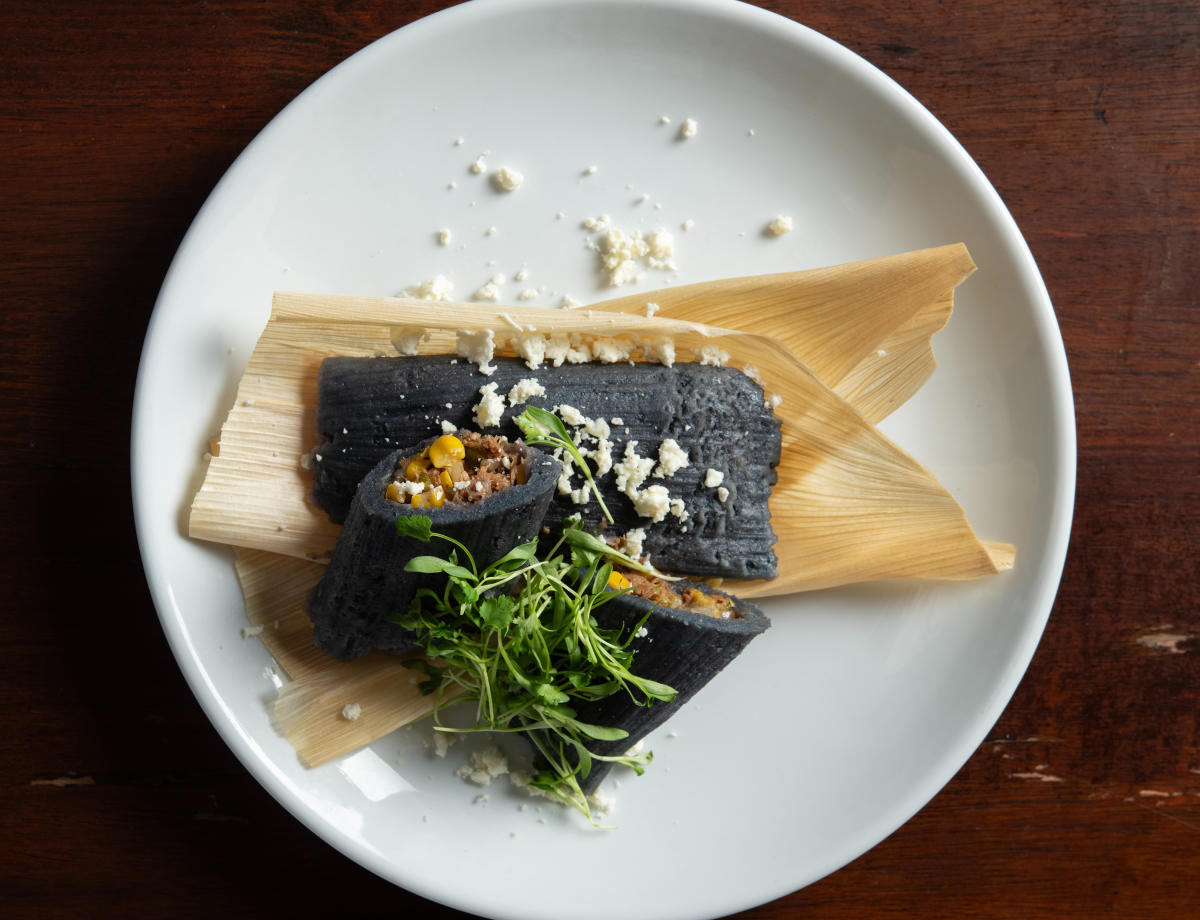
Myles Lucero recently made these tamales as appetizers for the Notah Begay III New Mexico Grande Slam. The menus for events with Begay are more Native-driven, Lucero says, starting from the kind of food that would be served at feast days. If you can’t find duck fat, substitute lard or vegetable shortening.
- 12 corn husks
- 4 cups blue corn masa
- 2 teaspoons salt, plus more to taste
- 1½ teaspoons baking powder
- ⅔ cup duck fat, at room temperature
- 2 cups vegetable stock (lukewarm)
- 2 tablespoons rendered fat from Rabbit Confit (see recipe)
- 2 medium summer squash, diced
- 1 small yellow onion, diced
- 1 cup roasted sweet corn
- 1 cup roasted green chile, finely chopped
- 4 cloves garlic, minced
- 2 pounds Rabbit Confit (see recipe)
- Pepper to taste
- Optional garnish: queso cotija, fresh cilantro
FOR RABBIT CONFIT
If you can’t find rabbit, you can use chicken or other poultry.
- 1 whole rabbit, skinned and cleaned, about 2½ pounds
- 4 cups duck fat or mild vegetable oil
Makes 12 Tamales
- Soak corn husks in warm water for 1 hour.
- In the bowl of a stand mixer, combine masa, 2 teaspoons salt, and the baking powder. Add duck fat and mix with the paddle attachment until fully incorporated (You can also use a fork or your hands.)
- Slowly add vegetable stock until the dough has a soft, spreadable texture. Set aside.
- In a large skillet over medium heat, add rendered fat and heat until it shimmers. Add the squash, onion, corn, chile, and garlic. Sauté until vegetables are tender and evenly cooked, 8–10 minutes.
- Mix in rabbit confit, season with salt and pepper to taste.
- Spread 3 ounces (about ⅓ cup) dough evenly over each softened corn husk. Place 3 ounces filling in the center. Fold sides of husk to meet in the middle, then fold over vertically. No need to tie.
- Cook the tamales upright in a steamer basket for 45–60 minutes until masa pulls away from husk easily. Garnish cooked tamales, if desired.
FOR RABBIT CONFIT
- Heat oven to 275°.
- Place rabbit in a large pot and cover completely with duck fat.
- Cook for 4 hours until meat is fall-off-the-bone tender.
- Let cool, then remove meat and reserve fat. Carefully pull meat from bones, checking thoroughly for small bones.
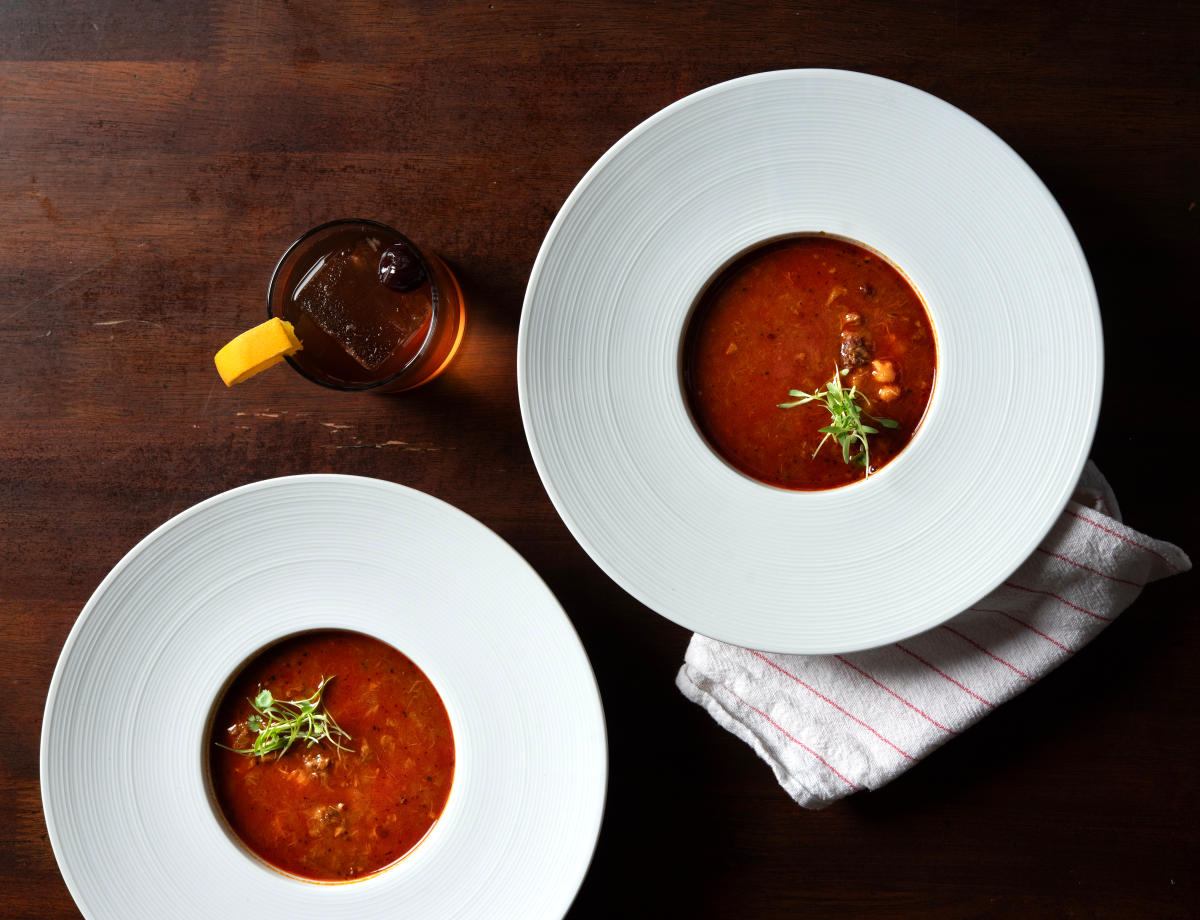
This stew is a staple at the Notah Begay golf events but also shows up on the restaurant menu. Myles Lucero sources the bison from Beck & Bulow, in Santa Fe.
- ¼ cup light vegetable oil
- 1 large yellow onion, finely diced
- 1 celery stalk, minced
- 2 cloves garlic, minced
- ½ cup New Mexico red chile powder
- 2 tablespoons Mexican oregano
- 8 cups reserved bison cooking broth from Braised Bison Short Ribs
- (see recipe)
- 2 fresh sage leaves
- 3 cups white hominy, soaked overnight and drained
- Braised Bison Short Ribs (see recipe)
- Salt and pepper to taste
- Optional garnish: fresh cilantro, diced onion
For BRAISED BISON SHORT RIBS
- 2 bison short ribs, about 5–6 pounds
- Salt and pepper
- ½ cup light vegetable oil
- 2 carrots, diced
- 1 yellow onion, diced
- 2 celery stalks, diced
- ¼ cup tomato paste
- 2 cups red wine
- 2 sprigs fresh rosemary
- 4 sprigs fresh thyme
- 1 small bunch parsley
- Water
Serves 8-10
- In a large skillet over medium heat, add oil and heat until it shimmers. Add onion, celery, garlic, chile powder, and oregano. Cook, stirring frequently, until vegetables are tender and mixture is very dark brown and coats the bottom of the pan, about 15–20 minutes.
- Add cooking broth, sage, and hominy. Bring to a boil, then reduce heat and simmer for 4–5 hours until hominy is soft and cracked open.
- Add cooked bison and continue cooking about 1 hour until the meat falls apart and absorbs flavors from the posole.
- Season with salt and pepper to taste. Serve garnished with cilantro and diced onion, if desired.
FOR BRAISED BISON SHORT RIBS
- Season short ribs generously with salt and pepper.
- In a large pot, heat oil over high heat. Sear ribs until deep golden brown on all sides. Remove and set aside.
- Add carrots, onion, and celery to pot and sauté until translucent. Add tomato paste and cook, stirring, until vegetables are lightly charred. Deglaze with red wine, scraping up browned bits from bottom of pan. Return ribs to pot along with rosemary, thyme, and parsley. Add water to cover.
- Bring to a boil, then reduce heat to low. Cover and braise for 6 hours until meat is fork-tender. Strain and reserve 8 cups cooking broth. Let ribs cool, then cut into thirds.