


Stitching Time: Julia Gómez
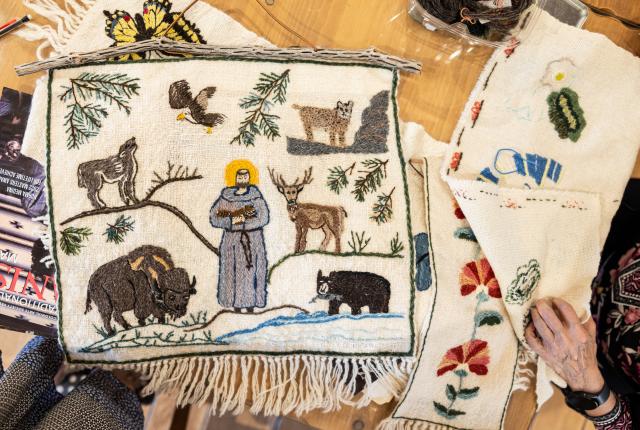
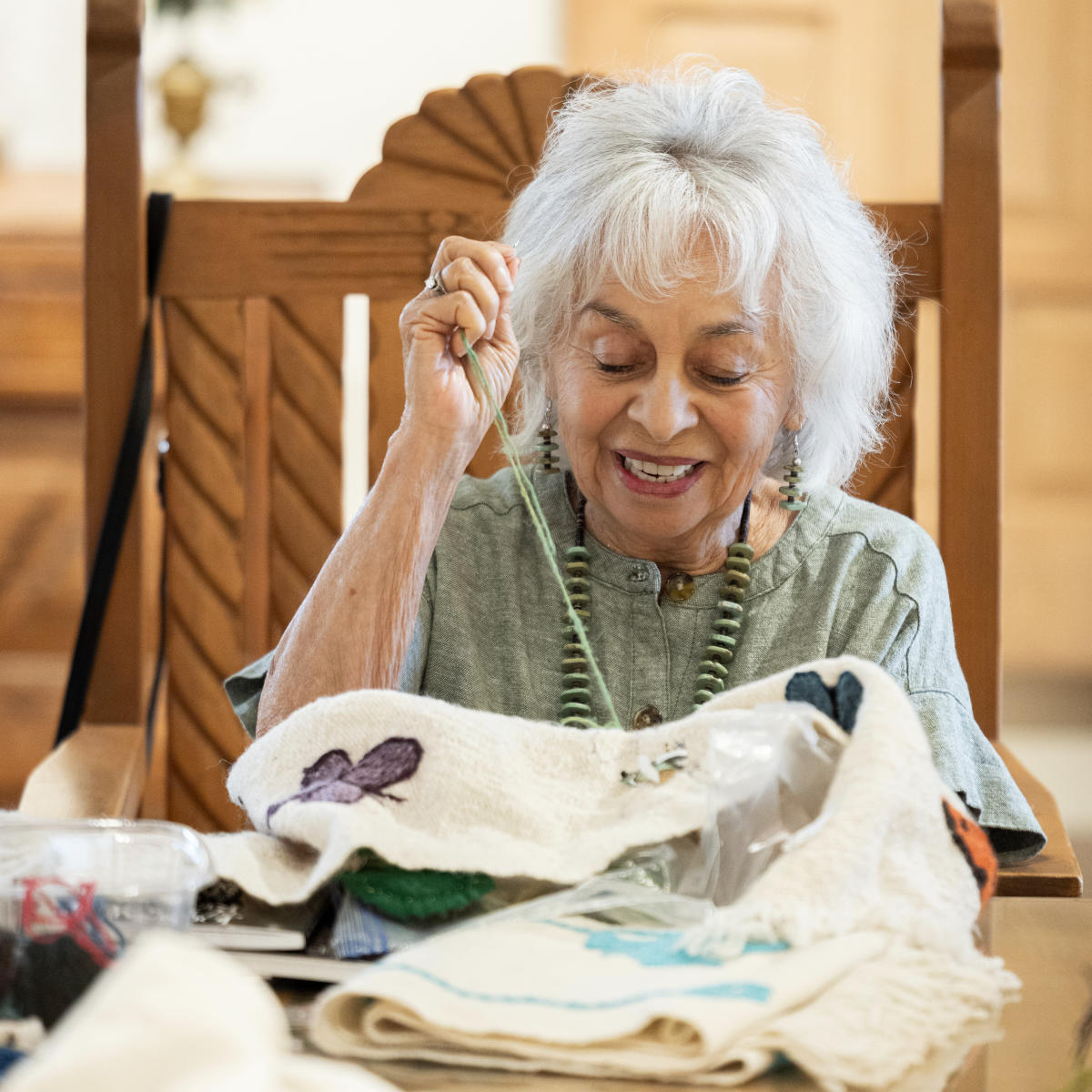
For more than 40 years, master colcha embroiderer Julia Gómez has served as both artist and teacher, preserving a centuries-old New Mexican tradition while passing its stories, skills, and cultural significance to new generations. You may have spotted Gómez at El Rancho de las Golondrinas in La Ciénega, the living-history museum where she has demonstrated traditional colcha embroidery since 2000.
I grew up sewing and embroidering little things like pillowcases and doilies, but I didn’t learn colcha until 1980, when I took a class taught by Mónica Sosaya Halford at the Museum of International Folk Art.
I fell in love with the story of the Churro sheep, which came over with the Spanish. Considered a peasant sheep in Spain for its coarse wool, it was prized in New Spain.
At El Rancho de las Golondrinas, I connected with Beatrice Maestas Sandoval, who revived interest in handmade sabanillas, the traditional base fabric for colcha.
From start to finish, colcha embroidery is a lot of work. We shear the sheep, wash the wool, spin and dye the yarn, weave the sabanilla, then embroider the finished design using the colcha stitch.
The stitch is what we want to save.
Your eyes hurt, and your brain is tired at the end of the day, but you’re connecting with your history as you work.
I turned 85 in May and plan to teach people about colcha embroidery for as long as I can.
The Dream Weaver: Emily Trujillo
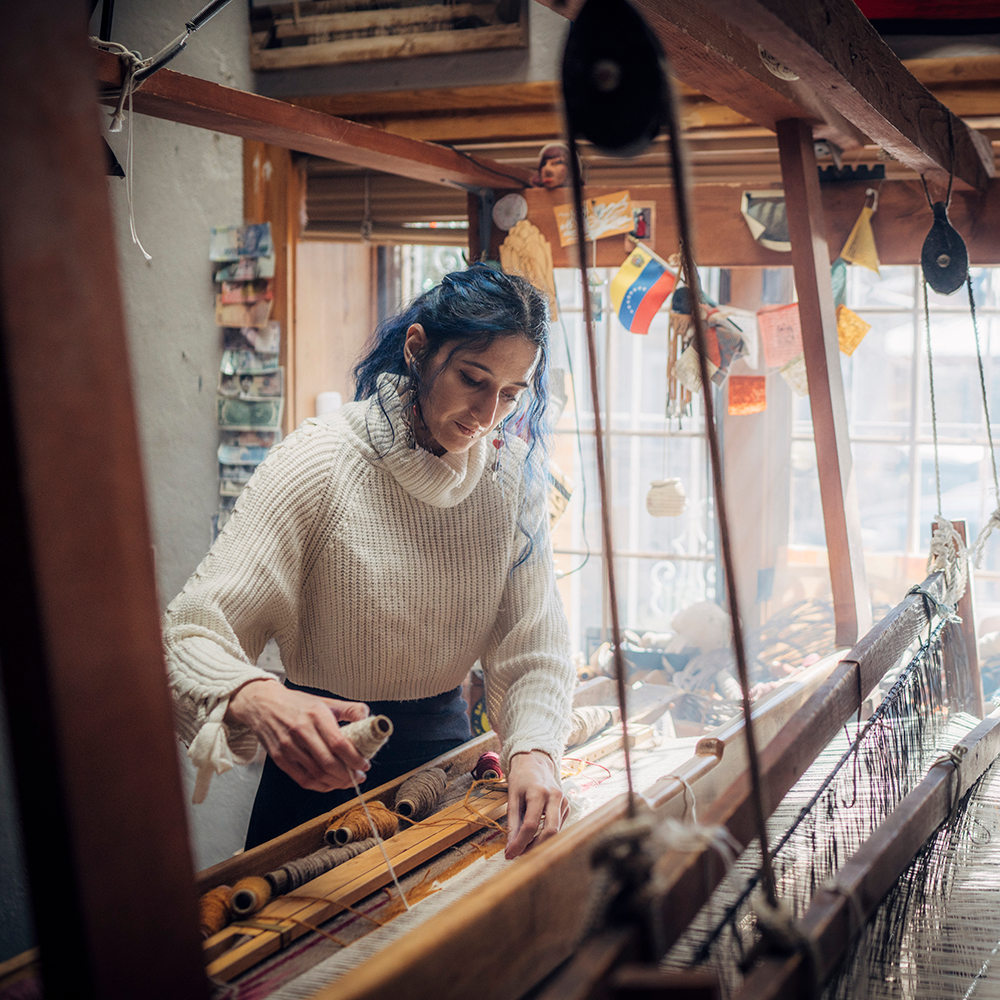
Emily Trujillo grew up in Chimayó among a family of weavers whose techniques and traditions span eight generations. Today, she balances a dynamic, geometrically informed studio practice with an active teaching schedule based at her family’s storefront, Centinela Traditional Arts. Trujillo’s newest course offering is Tapestry Math, a class that uses math to demystify complex weaving techniques and patterns.
When I was growing up, weaving felt like an obligation. I worried about the expectations on me as the daughter of well-known weavers [Irvin and Lisa Trujillo].
You have to work really hard to be good at weaving, and I didn’t fully appreciate it until I really tried it and got into it.
Now, weaving feels like part of who I am.
Music videos, figure skating, my heritage: I weave myself into my work.
The more people learn about the history of Chimayó weaving, the more interested and appreciative they become. You can appreciate someone else’s culture without copying it. I love watching students get adventurous with designs and color.
Once you understand the logic of weaving, there’s a lot of room for creativity. I’ve had expert weavers tell me there really aren’t any rules, and I like that.
With practice—and a lot of math—I’ve gotten more comfortable with creating complex designs. I even taught my dad, Irvin Trujillo, who was trained as an engineer, my own ways of incorporating math into his already existing vocabulary.
Metal Mentor: Cree LaRance
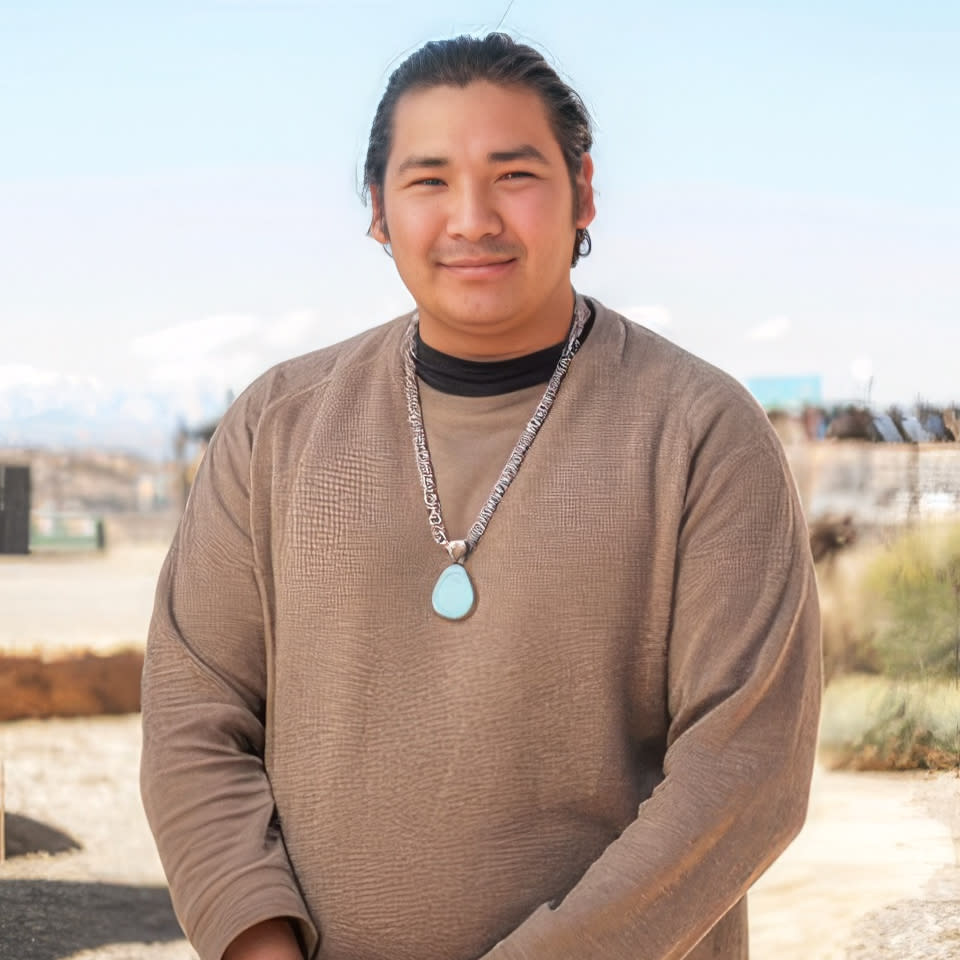
Tewa, Hopi, Navajo, and Assiniboine artist Cree LaRance is a Santa Fe silversmith and teacher whose work reflects both tradition and innovation. He says silversmithing is a distinctly New Mexican art, born of many cultural influences and continually transformed by the artists who practice it.
Silversmithing arrived with the Spanish, was adapted by Native artists, and evolved into its own distinct category over time.
Today, silversmithing is as New Mexican as red chile. I am Tewa, Hopi, and Navajo and grew up around art. My mother was always painting, and my dad is a metalsmith.
I’m in between the older generation and the emerging artists, and we’re in good hands. There’s tremendous young Native talent out there, both technically and creatively. The passion is there.
Native people from many backgrounds—Pueblo, Hopi, Navajo—have long been known for their jewelry traditions, but materials pricing is a concern. Silver used to be affordable, but it’s jumped status, and turquoise and coral have gotten harder to find.
When I teach, I end up inspired. People come in with no experience, and they’re unsure about their abilities, but they walk out with something that’s completely unique. I’ll watch them experiment in ways that wouldn’t have occurred to me.
There’s a camaraderie that comes from sharing studio space and learning and working together.