


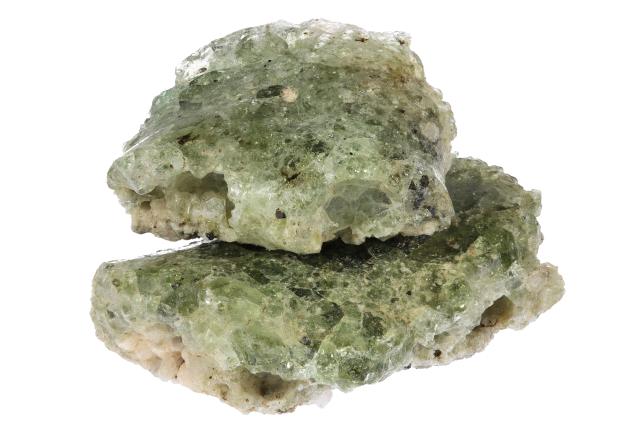
WHEN THE FIRST ATOMIC bomb was tested at White Sands Missile Range in 1945, surrounding sands were sucked into the flames. That atomic sludge dried out to trinitite, an eerie-looking grayish-green glass that James Stemm, director of collections at the National Museum of Nuclear Science & History, in Albuquerque, calls the “main artifact” from the Trinity Site. Similar to pumice, trinitite is rarer, slightly radioactive, and more expensive. In a state with a rich geological history, the trinitite displayed at the museum gives visitors an opportunity to reflect on how actions taken on New Mexican soil decades ago still shape the world as we know it today.
The History of Trinitite
Glass formed by the 1945 Trinity test offers a glimpse of atomic history at Albuquerque’s nuclear museum.
The Trinity test's intense heat fused desert material into trinitite. Photograph courtesy of Alamy/Björn Wylezich.