


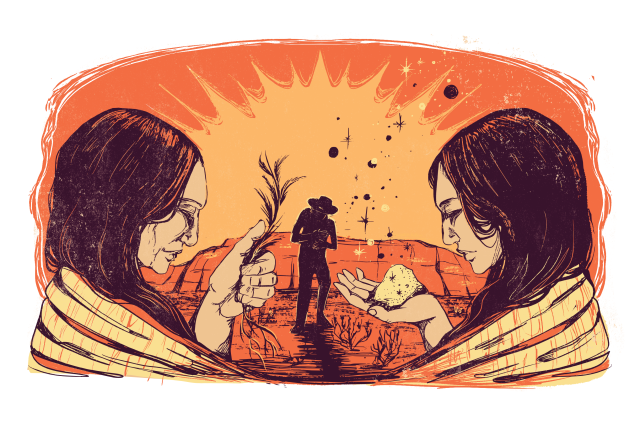
THERE IS AN OLD DICHO from Spain: No creo en brujas, pero las hay (“I don’t believe in witches, but they exist”).
Fall in New Mexico brings such ideas into focus as Halloween season arrives, along with tales of witchcraft and sorcery. But the holiday is only a recent development in the long history of the region. The colony of New Spain was very Catholic—a place where God and his angels, santos, and spirits could be encountered in acequias, on lonely trails, and even in the sky. Brujas (witches) and evil spirits were also believed to be ever-present. In colonial New Mexico, you might say every day was Halloween.
Growing up in the Land of Enchantment, children are still told about brujas—not as stories or fables but as reality. “Don’t bother Señora Romero, she’s a bruja!” “See that town on the hill? It is a town of brujas!”
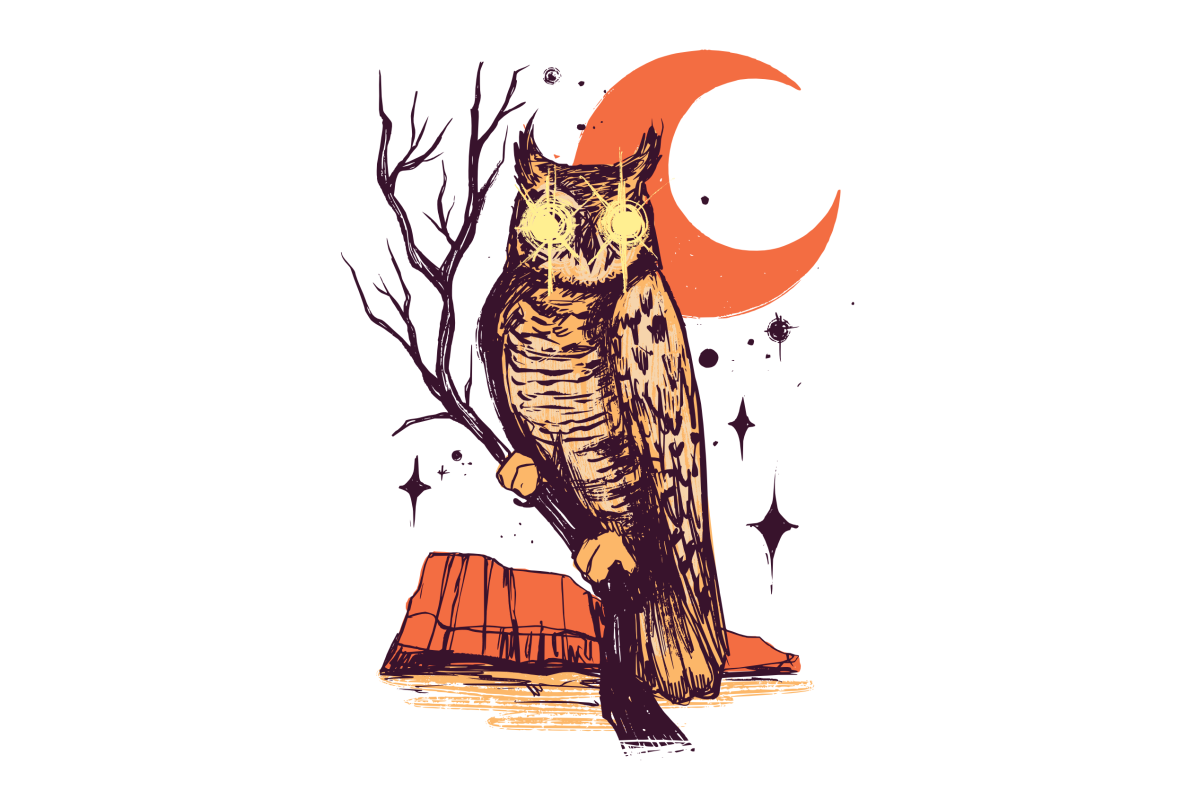
The ways of New Mexico witches also appeared in books and stories carried by priests, colonists, and settlers from far-off lands across the vast ocean from Spain and up the Camino Real from Mexico. Among odd local beliefs about witches, there was the persistent notion that some witches could contain themselves in an egg and fly from New Mexico to Mexico City and back in one night. Some could become invisible and move about unseen in order to perform evil acts. Others were said to have the ability to shape-shift or become animals such as owls or black cats.
Superstitions abounded. It was said that if you saw a tecolote (owl) in a tree while you were walking along a path, you had to tell the owl, “Mañana vengas por sal,” or “Tomorrow you’ll come for salt.” The next day, if somebody knocked on your door and asked to borrow some salt, they were a witch.
The surest way to ward off the evil of witches and sorcerers was universal: invoking the names of Jesus, Mary, and Joseph while making the sign of the cross. Devotion to Saint Michael the Archangel couldn’t hurt either.
While studying for my master’s degree in the 1990s, I wanted to learn more about the beliefs that made up these common refrains of my childhood. As I began reading Spanish Catholic teachings about witchcraft in Spain and Mexico and about the legal operations of the Inquisition, I started to see that observations about bewitchings were based in historical fact. These real events in our collective past were not mere tales to frighten children.
Why was New Mexico such fertile ground for witchcraft accusations? During the colonial period, New Mexico was peopled by Puebloans, Spanish, mixed-blood mestizos, Apaches, Navajos, Comanches, Hopis, and others. The 1700s were a particularly dangerous time, as warfare between all these groups was common. Raids, battles, violence, and retribution were a way of life.
Cautivos (captives) were children of war who were taken and forced to live among their captors. In Spanish colonial society, these Native people were called Genízaros. Living on the margins of the colony, they became servants, slaves, ranchers, explorers, and soldiers. The Spanish were suspicious of and even feared them at times, since it was believed their otherworldliness made them dangerous.
This was the New Mexico of the colonial period, a cultural and biological blending of Puebloan, Spanish, and Genízaro peoples. Belief in witches was a trait they all shared.
THAT BELIEF HAS A FOUNDATION in several cases of colonial witchcraft and sorcery accusations. The first few are isolated incidents that, in their own way, foreshadow an outbreak of sorcery at Abiquiú in the 1760s that is perhaps the most famous tale of witches in New Mexico.
The documents of these happenings are both religious and civil in nature and origin. They can be a challenge to read for even the most seasoned historian due to archaic handwriting and nomenclature, the condition of the documents, and erratic voicing in narratives recorded by scribes. Still, the events are rich in cultural conflict and shine a spotlight on the tensions that existed during the period.
The anxiety of conquest impacts both the conqueror and the conquered, as both struggle for power and influence in the colonial period. Cultural attributes could be weaponized to injure your enemy, including conjuring spirits and enacting curses, hexes, and spells. As a result, the notion that witches, spells, and curses were ever-present was commonplace in such a society.
THE FIRST NEW MEXICAN WITCH
BELIEF IN BRUJAS AND HECHIZERAS (SORCERESSES) WERE passed down to us from centuries-old concepts that existed in Medieval Spain, fed by Catholic, Jewish, and Muslim ideas, some harkening back to ancient Romans and Visigoths. These ideas were later imported in the 1500s to the Americas, where conceptions of Aztec witches and necromancers blended with those of the Spanish. These stories and descriptions made their way north to New Mexico in the 1600s, where they simmered in a cultural cauldron of theology, folklore, and superstition.
The earliest recorded account of a witch in the region comes from the colony’s first capital of San Gabriel de Yunque-Ouinge, just west of Ohkay Owingeh. There, a Mexican Indian named María de Zamora was accused of witchcraft in 1607. María allegedly used powders and herbs to poison her fellow citizens and even tried to get her daughter, Lucía, to kill her husband using dark magic. María was Indigenous, which made her suspicious to authorities, and the wife of colonist Bartolomé Montoya, who was from Spain, near Sevilla. The couple are common ancestors to many Hispano New Mexicans, myself included.
Lucía accused her mother of witchcraft, claiming María gave her a powder in an attempt to kill her husband, Diego Robledo. Lucía also said her mother invoked evil spirits in a small room and spoke in a diabolical language. María was said to have the ability to make a man love a woman and was also known to use peyote in her hexes. This caught the attention of the local priest, Padre Escobar, who reported to Gobernador Juan de Oñate the strange happenings in the new Spanish colony. The priest even preached a sermon that warned against using witchcraft or sorcery, or failing to report anyone who did so.
Ultimately, while there was concern that María had committed heresy by invoking evil spirits, the case was not forwarded to the Inquisition. She and her husband were instead banished from San Gabriel for an uncertain period of time. Clearly they returned, as they left many descendants.
THE TWO WITCHES
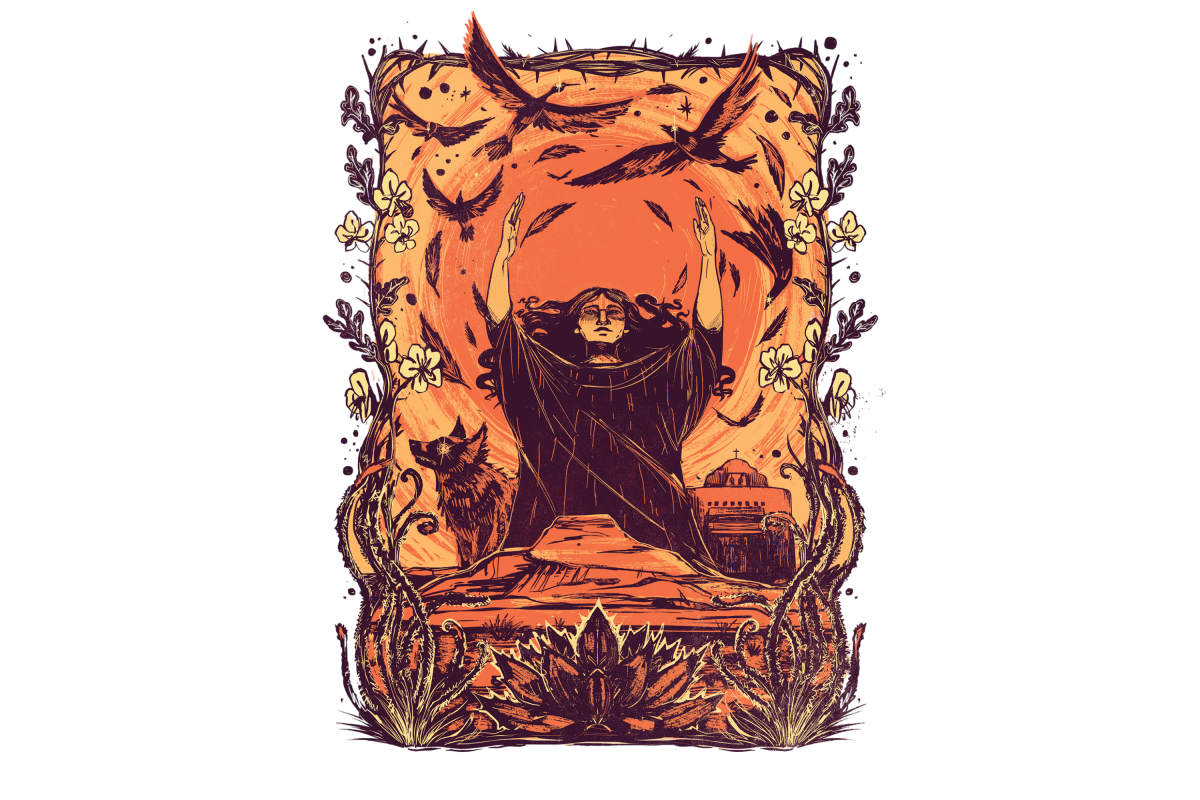
IN 1626, BEATRIZ DE LOS ÁNGELES, another Mexican Indian and colonist in Santa Fe, was said to have given her mestiza daughter, Juana de la Cruz, a powder to poison Juana’s husband, Juan Griego Bernal. If this sounds familiar, records from the period show Indigenous women were frequently targeted and accused of being witches. Native American cultural practices were often perceived to be evil, and Franciscan priests viewed the world as being caught in a battle between God and Satan. In this case, retribution, vengeance, and jealousy were at the heart of the accusations.
The records tell a convoluted tale. Mother and daughter were seemingly both in relationships with men outside of their marriages, and when the men became abusive, the so-called witches went into action. According to documents from the period, the two women used powders and spells to inflict illness, and eventually death, upon one of the men. Beatriz supposedly used a potion to kill her lover, Diego Bellido, who had abused her. She also was alleged to be involved in the witchcraft death of a soldier named Hernan Márquez Zambrano, who was accused of sleeping with her daughter, Juana.
Juana was accused of using mal ojo (evil eye) to harm children; it was even said she had killed an infant. She had allegedly ensorcelled food, lacing a mixture of milk and cream with poison to hex and murder an unfaithful man. She was also rumored to have the ability to fly at night to spy on her lovers.
The case was initially dropped, only to be revived by the newly arrived custodian, Fray Esteban de Perea, in 1631. After reviewing the facts, the Franciscan leader attributed the entire affair to superstition and gossip.
THE WITCHES OF ABIQUIÚ
IN 1760, FRAY JUAN JOSÉ TOLEDO, THE PRIEST IN ABIQUIÚ, wrote a letter to local government officials with an alarming statement: His pueblo was in the grip of the devil, with many deaths associated with the practice of witchcraft and sorcery. This initiated the witchcraft case at Abiquiú—New Mexico’s version of the Salem witch trials, but with a very different kind of people and a very distinct outcome.
With the aid of a local Native boy, Toledo was convinced he had discovered a school of sorcerers led by local Genízaros. Miguel Ontiveros, nicknamed El Cojo because he walked with a limp, was said to have entered into a pact with the devil. Toledo claimed El Cojo used spirits and incantations to control the local people. Others were accused of being powerful sorcerers, including a Genízaro named Agustín Tagle and two women called Atole Caliente and Petra la Come Gallinas, or Petra Who Eats Chicken. All were said to have killed Toledo’s predecessor, and the priest feared they were trying to bring demonic forces into not just Abiquiú but also the entire kingdom and province of New Mexico.
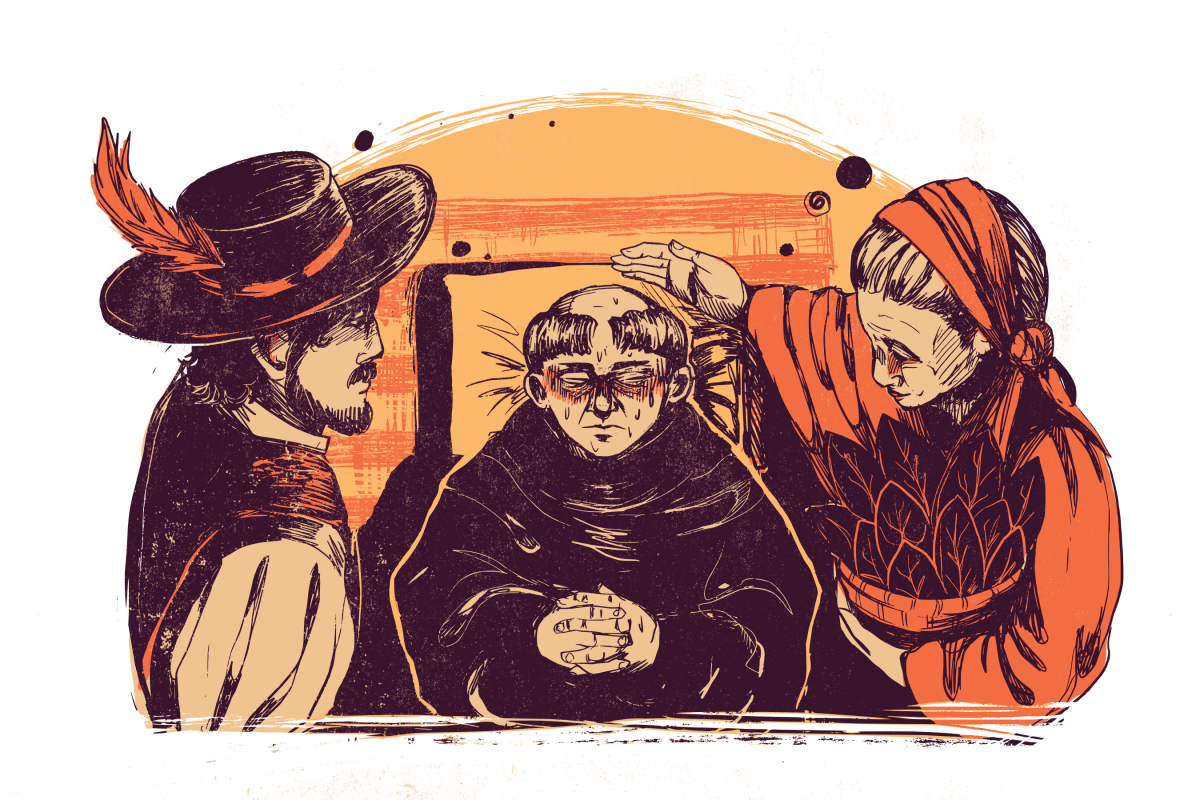
Toledo appeared to be well-versed in the ways of witches and sorcerers. His report to officials at Santa Cruz and Santa Fe described what was happening in Abiquiú. People were bewitched with an illness that caused anxiety, fever, dehydration, and intestinal problems, sometimes resulting in the victim’s death. At one point the priest himself was afflicted, leading him to consult with a local curandera, an Indigenous folk healer. However, fearing the curandera was a witch, Toledo had the Spanish magistrate of Santa Cruz, Carlos Fernández, witness the treatment so that the priest would not to be cursed. It was often believed curanderas were also witches, or at least mixed up with the dark arts in one way or another.
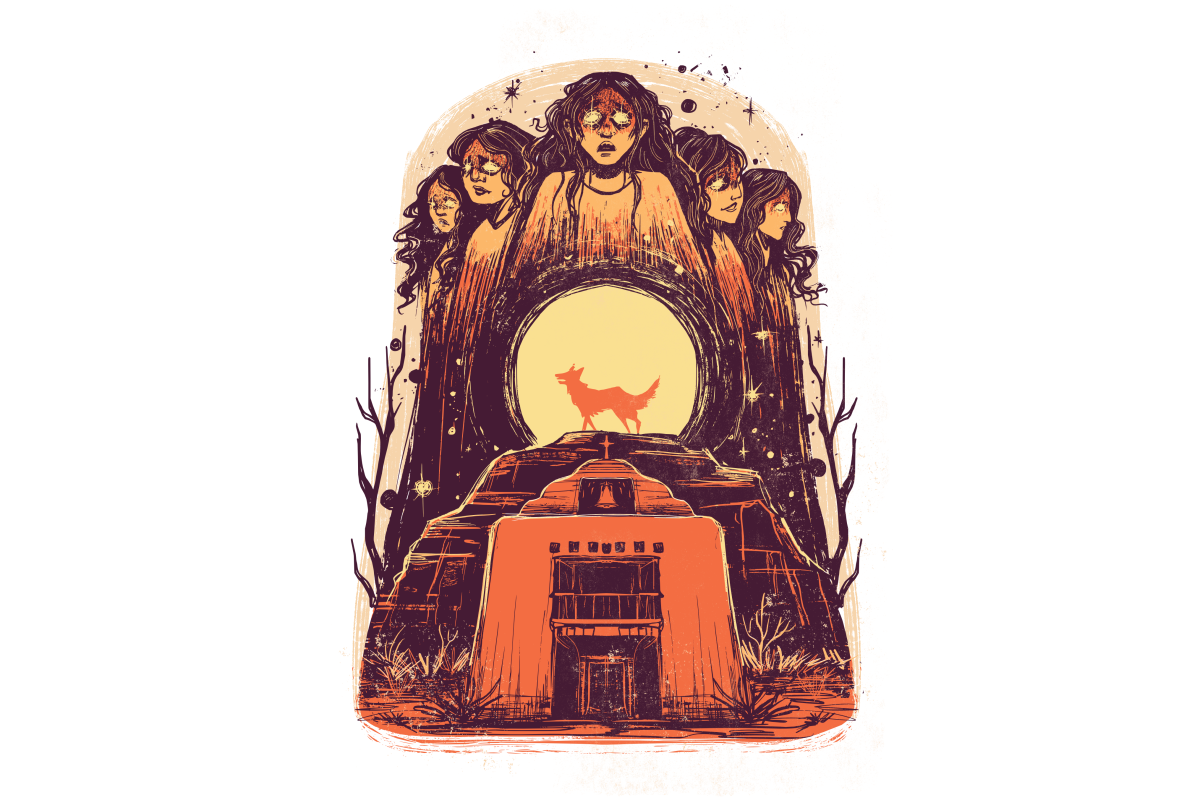
Other manifestations by the local witches included shape-shifting. On one occasion, a Spanish man claimed to have killed a large wolf, only to find the body of a dead Genízaro man in its place. There was a special stone in the mountains near Abiquiú where the witches supposedly gathered to carve images, chant incantations, and give adoration to the devil. They were said to have the power to change into birds and fly to El Pedernal. According to reports, such manifestations only occurred after the witches removed their rosaries, renounced the Catholic faith, and invoked a spirit. Toledo also considered some local Native dances and rituals to be evil.
Events took a turn for the worse when it appeared that five young maidens of the village were possessed by evil spirits. In his letters, the priest described their afflictions, which included anxiety, violent spasms, hearing voices, speaking in Latin, and shrieking like animals. Their evident hatred of him and his holy mission convinced him they needed what he called “the spiritual medicine of exorcism.” When the priest recited the rite of exorcism, one of the girls exhibited violent throes of possession. She accused 178 people in New Mexico and Sonora of being witches, listing names and physical descriptions of her tormentors.
These were truly alarming revelations. It would appear the outbreak of witchcraft was consuming the province of New Mexico, and it threatened to spill over its borders.
THE INQUISITION GETS THE CASE
THE INQUISITION WAS AN ECCLESIASTICAL COURT USED BY the Catholic Church to ensure orthodoxy among priests and lay people alike. The Spanish Inquisition was established in 1478 in order to police conversos—converts from Judaism and Islam in Spain who were suspected of secretly practicing their old religion. Heresies, such as blasphemy, as well as the breaking of social and religious norms, such as bigamy, were also on the Inquisition’s radar.
The governor of New Mexico during the witch outbreak in Abiquiú, Tomás Vélez Cachupín, was so concerned that he sent the case to the Holy Office of the Inquisition in Mexico City. The events had sent shock waves through New Mexico society, and the colony needed a solution. The accused Genízaros were arrested and jailed until Inquisitors could hand down judgment from abroad.
Once the accounts from Abiquiú were received, the Inquisition’s rebuke was swift: This was no case of witchcraft or sorcery. Rather, it was rooted in the priest’s failure to learn Native languages and, therefore, to adequately convert and catechize the Indians at Abiquiú. The Genízaros’s faith exhibited a syncretic blending of Catholic teaching, witch beliefs learned from the Spanish people, and their Indigenous religious rituals, all of which terrified Fray Juan José Toledo. Furthermore, as the Inquisition considered the testimonies of evil spirits to be unreliable at best and lies at worst, the accusations against the 178 people for being witches were thrown out.
The fate of the Genízaro witches of Abiquiú is veiled in the mists of history. Some were forced to live out their lives working for this Spanish family or that government official, or to work off their sentence in an obraje (sweatshop). One died while jailed, while others no doubt returned to their domestic lives at Abiquiú.
The case has resounded down through generations of New Mexicans of all backgrounds. Abiquiú, a town largely composed of Genízaros, came to be known as the epicenter of brujería in New Mexico—so much so that, even into the 20th century, older members of the community continued to recite this prayer for protection against brujas:
Cuatro esquinas tiene mi casa
Cuatro angeles que la adoran
Lucas, Marcos, Juan y Mateo
Ni brujas, ni hechiceras
Ni hombre malhechor
En el nombre del Padre, y el Hijo, y el Espiritu Santo. Amen.
My house has four corners
Four angels adore it
Luke, Mark, John and Matthew
Neither witches or sorceresses
Nor evil-doing man
In the name of the Father, the Son, and the Holy Spirit. Amen.
WE CONTINUE TO HEAR these tales today, of witches and warlocks on the dusty paths of rural New Mexico, because they tell us about who we were. Handed down for generations from elders to young people, these fascinating stories are populated by guardian angels, saintly apostles, and curanderas who healed, but also evildoers who, it was believed, consorted with the devil. But most importantly, they involve the lives of real people.
That is why, when an elder wants to tell a child about a witch event, they often begin with something like, “While I don’t believe in brujas, nor have I ever seen one… this is exactly what happened!”
SPOOKY SYLLABUS
State historian Rob Martínez recommends three books for further reading.
The Witches of Abiquiu by Malcolm Ebright and Rick Hendricks (University of New Mexico Press, 2006). A very sober and scholarly approach to the original documents from the period, and a must-read for anyone interested in the events at Abiquiú in the 1760s.
Inquisition by Edward Peters (Free Press, 1988). This short book is surprisingly detailed and an easy read for anyone wanting an introduction to the history of the Inquisition through the centuries.
Witchcraft in the Southwest by Marc Simmons (University of Nebraska Press, 1974). While somewhat dated, this compilation of witchcraft and sorcery events from the colonial period into the 1800s is fascinating reading from historical, cultural, and anthropological perspectives.