


AT STILL SPIRITS DISTILLERY’S new tasting room in Los Ranchos de Albuquerque, a bartender strains a frothy, blush-pink Tres Flores into a coupe glass. Tart hibiscus from the house-infused vodka mingles with lemon before giving way to honeyed elderflower and a hint of rose. As sunlight pours through the plant-filled lounge and neighbors linger over cocktails at the warm wooden bar, the polished scene signals just how far New Mexico’s craft spirits culture has come.
It’s a long way from owner Zac Hulme’s backyard, where he started distilling vodka in 2015. At the time, Albuquerque had a single distillery, Left Turn Distilling, but the city’s booming brewery scene had Hulme wondering if there might be a similar thirst for locally made spirits. “Microbreweries had really opened recognition to the fact that we can do a homegrown thing well,” he says.
Two years later, Still Spirits launched a tiny tasting room near downtown. Today, its gin, vodka, and whiskey turn up in stores and restaurants throughout the state, paving the way for this roomy cocktail lounge, which opened in January. Still Spirits’ trajectory mirrors the industry that grew up around it.
New Mexico established a craft-distiller license in 2011, laying the groundwork for small producers. Then, in 2021, liquor-law reforms gave restaurants with beer-and-wine licenses a relatively affordable route to serve New Mexico–made spirits without purchasing one of the state’s expensive dispenser licenses. Today, nearly two dozen distilleries operate statewide.
“It opened up a huge market for all the local guys,” Hulme says. “People are more excited to order stuff that’s from down the street—and they should be. There’s a sense of pride.”
Expectations for what goes into the glass have evolved too. Hulme remembers when ordering a cocktail might mean little more than a Seagram’s 7 and 7. Now, New Mexico bartenders and distillers experiment with local grains and botanicals like blue corn, osha root, and juniper to create a distinct sense of place. Beyond green chile, says Hulme, piñon has become a signature local ingredient. “It’s got a really delightful butterscotchy, malty pine flavor.”
Kate Gerwin, owner of Albuquerque’s Happy Accidents, remembers a time when the state’s bar culture struggled to find its identity. “New Mexico was always like 10 years behind in the craft cocktail scene,” she says. “But in the last five years they’ve really tried to push on the gas and catch up to other markets.” She points to a wave of bars emphasizing better ingredients, technique, and spirits.

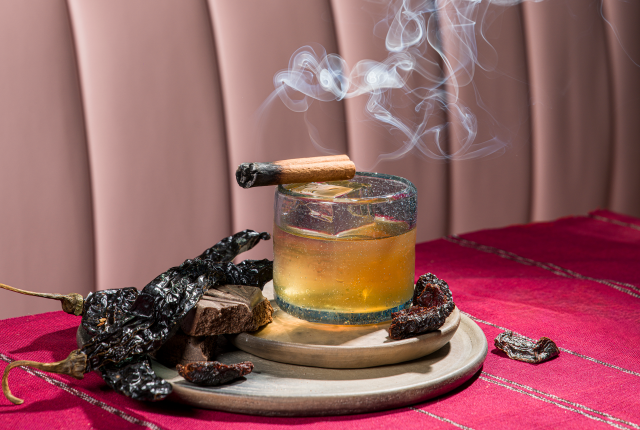
New Mexico ingredients are shaking up the drinks scene. Photograph by Tira Howard.
The wider world is taking notice. In the past year alone, Albuquerque’s Daydream Rum Bar was a James Beard Award semifinalist and won North America’s 50 Best Bars’ Best Bar Design Award; Campo at Los Poblanos Historic Inn & Organic Farm received Michelin’s Exceptional Cocktails Award; and Safe House Distilling Co. won a dozen medals at the American Craft Spirits Association competition—to name a few.
Gerwin, who was recently named one of Bar Magazine’s 100 most influential industry figures, believes that recognition has prompted outsiders to look beyond traditional cocktail capitals. “No one here is doing the same thing,” she says. “All of the distilleries have quite a unique perspective on what they want to offer.”
The industry is still thinking bigger too. In Carlsbad, Lance Moore and his partners at Barrelhead Distillery are finishing an 8,000-square-foot highly automated facility that’s designed to produce up to 110,000 bottles annually. Plans include vodka, gin, bourbon, rum, and agave spirits, with ambitions to distribute nationally. “It’s gonna be a monster once we are up and running,” Moore says.
That momentum comes at a curious moment. Americans are drinking less: A 2026 Gallup survey found that 54 percent of U.S. adults drink alcohol, tying the record low set a year earlier. Gerwin sees the shift not as the end of cocktail culture but as a change in what customers value. Tastes, she says, are circling back toward drinks that are “simple, approachable, and accessible.”
The next opportunity for New Mexico’s still-young cocktail culture may lie in pairing its newfound ambition with what Gerwin calls “a really good drink at a really good price.” While New Mexico has spent the past decade proving itself, the new goal may be simpler: make drinks well, make them ours, and make people want another round.
KERNEL KLINK
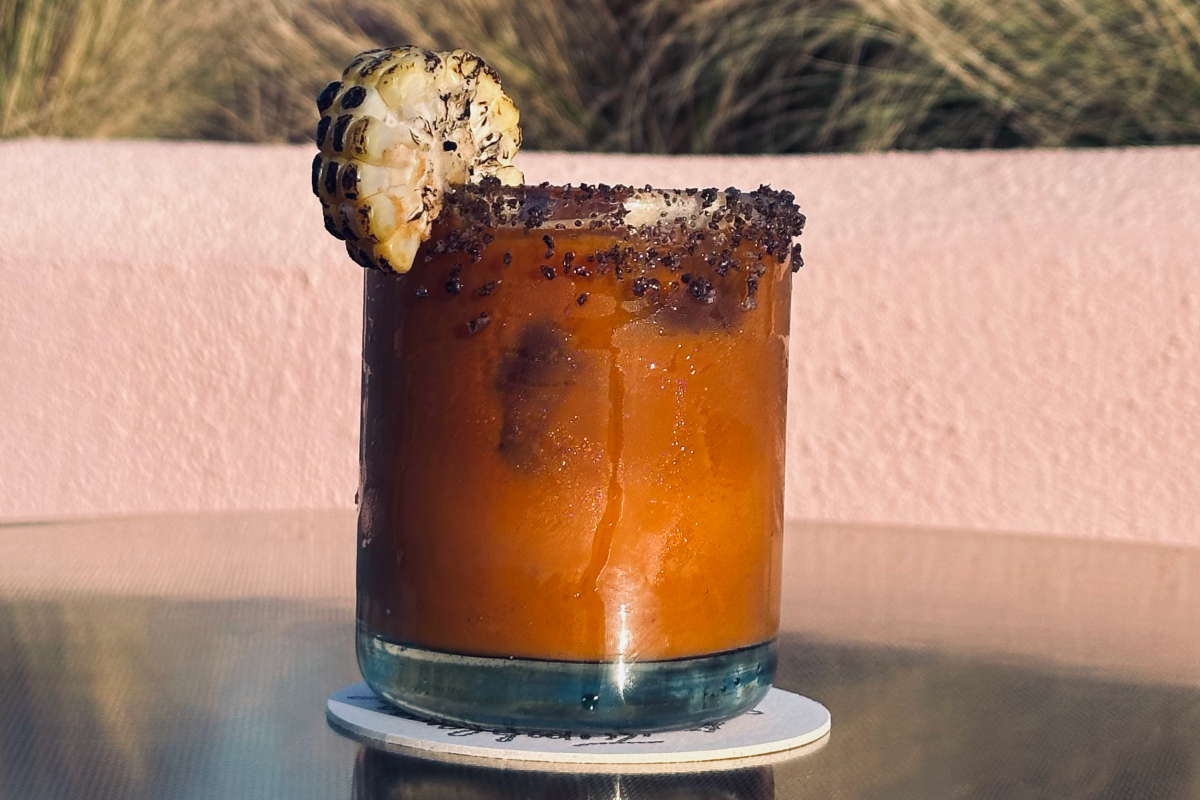
At Tularosa Distillery’s Tumbleweed Lounge, desert-grown sotol anchors New Mexico–inspired cocktails, like this earthy creation that makes its menu debut this autumn. “This cocktail is a great replacement for a Bloody Mary,” says co-owner Peter Kauffman. “Though the ingredients are savory, it’s refreshing and slightly sweet.”
- 2–3 ears corn
- 2 ancho chiles, softened, stemmed, and seeded
- 3 cups water, plus more as needed
- ⅓ ounce agave nectar
- 5 drops Cuna de Piedra Smoked Heirloom Chile Bitters
- 2 ounces Tularosa Sotol
- Ice
- Slice of lime, optional
Makes 1 cocktail; corn-chile mixture makes about 8 cocktails
1. Roast corn on a grill on medium-high heat, turning occasionally, until kernels are tender and browned. Let cool slightly, then cut kernels from cobs.
2. Add corn, chiles, and 3 cups water to a blender and blend on the highest speed for 4–5 minutes, adding more water as needed until completely liquefied.
3. Combine 4 ounces of the corn-chile mixture, agave nectar, bitters, and sotol in an ice-filled cocktail shaker. Shake 8–10 seconds. Add ice to a double old fashioned glass and strain in the cocktail. Garnish with a lime or corncob slice. Transfer leftover corn-chile mixture to an airtight container and refrigerate up to 3 days.