INSIDE THE FORMER STAHMANNS COUNTRY Store, in the heart of New Mexico’s pecan country, I can see a kind of alchemy is at work. Where metal shelves once sold locally grown nuts, grow bags now sprout clusters of mushrooms in various stages of transformation. Anticipation grows as I reach the misty fruiting room. In here, beguiling blue-gray oysters, spectacularly shaggy lion’s mane, and lightly speckled chestnut caps emerge from slits in their bags like something out of a fairy tale.
The rich, earthy fragrance of these magnificent mushrooms piques my appetite. “Chestnut is one of my favorites,” says Ximena Zamacona, founder of Full Circle Mushrooms, as she guides me through her 5,700-square-foot indoor farm, in La Mesa. “I love its nutty umami.”
From the outside, you’d never know that this low-slung, unmarked building has been repurposed into one of New Mexico’s largest mushroom farms—producing, on average, 900 pounds of six varieties of mushrooms weekly. They’re sold to restaurants, grocery stores, and farmers’ markets in Las Cruces and Albuquerque.
Founder Amanda Powers and head of operations Jacob Harris at the Enchanted Farms Mushrooms store, in Albuquerque.
Zamacona grew up in central Mexico’s Ciudad de Querétaro, where she studied chemistry and agriculture before working in high-tech greenhouses in Mexico and the United States, growing hydroponic tomatoes and other crops. She shifted to mushrooms after moving to La Mesa in 2019 with her husband, Rafael Rovirosa, who grew up in Las Cruces, establishing Full Circle in 2023. “I started mushroom farming for a reason, which is: What can I do that will give back to nature and also give to the community?” she says. “The idea was not to be very aggressive with nature, but rather to do something to help with climate change.”
More than half a dozen other mushroom farms have sprouted across New Mexico in recent years, with many launching during the pandemic. Like Full Circle, most have made good use of social media and the internet to become accessible to customers. “Mushrooms were treated as ugly plants—there’s a lot of mycophobia—but they’re a kingdom,” Zamacona says. “I started during Covid delivering door-to-door to friends and neighbors, and then it grew. [Now] mushroom growing is all over the U.S.—and we pretty much started at the same time.”
Full Circle Mushrooms founder Ximena Zamacona.
Beyond their culinary use, mushrooms have long been prized for their medicinal benefits. “Every mushroom is medicinal,” says Stephanie Dukette, who founded Santa Fe Mountain Mushrooms 15 years ago, after studying with renowned mycologist Paul Stamets. “They all have unique qualities that promote healing.” Dukette sells medicinal mushroom blends, powders, and shiitake soup at the Santa Fe Farmers’ Market from October through May. “The blends do very well. I have nine mushrooms in one blend that helps with immunity and memory and is anti-inflammatory.”
From La Mesa, I-25 leads me like mighty mycelium—the rootlike underground highway of interconnected fungi that has stretched around the planet since the dawn of time—to another thriving, woman-owned mushroom farm 240 miles north, in downtown Albuquerque.
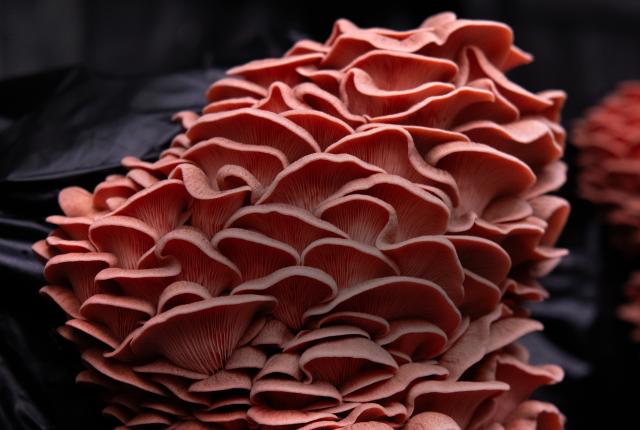
Housed in the WESST Enterprise Center, a Silver LEED-certified incubator for women-owned businesses, Enchanted Farms Mushrooms produces nine varieties of gourmet and medicinal mushrooms. The 1,700-square-foot urban farm is filled with five-by-nine-foot black Gorilla grow tents. Peering through viewing windows, I’m mesmerized by the near-mystical glow of fan-shaped pink, golden, and Grey Dove oyster mushrooms, mahogany-hued shiitakes, and the long creamy stems of pioppinos that push through grow bags.
Full Circle’s chestnut beauties.
“We have more demand than supply,” says Amanda Powers, who opened Enchanted Farms Mushrooms in December after leaving a corporate career that included a stint as COO of New Mexico United, helping to launch the Albuquerque-based soccer team. “I wanted to do something that was sustainable, based on urban agriculture, that was good for people.”
In June, Powers opened an on-site shop. It’s brimming with powders, tinctures, and mushroom-themed gifts, along with cookbooks, cooking oils, and other fun fungi items. In a glass case beside the cash register, freshly harvested lion’s mane, shiitake, and brightly colored oyster mushrooms beg to be taken home. They’re joined by chanterelles dropped off by foragers who find them in nearby ski areas. Customers stop by here to pick up weekly subscriptions.
Powers and her husband, Malcolm June, also sell fresh and dried mushrooms at local farmers’ markets and offer them wholesale to area restaurants. In Santa Fe, 315 Restaurant & Wine Bar’s owner and chef Louis Moskow says he’s thrilled to cook with these locally grown beauties. “Right now, we’re serving cavatelli with a mix of Enchanted Farms tricolor oyster mushrooms, shiitakes, and pioppinos—as well as zucchini, and cherry tomatoes in a white wine pesto,” he tells me in late July. “They’re really fresh, and they’re pristine.”
Nathan Sanchez in Full Circle Farms’s inoculation lab.
Mushrooms are actually the fruit of fungi, and their fantastic flavors and textures range from briny, as in chewy blue oysters, to the subtle sweet taste of lobster and crab, which can be found in tender and spongy lion’s mane. “Oyster mushrooms are our most popular,” Powers says. “They are stunning to look at. They have big caps, which carry a lot of the flavor and can be very versatile in the kitchen.”
In the production labs, teams mix and bag substrate (a sterilized wood-based material that provides support and nutrients for the mushrooms to grow), inoculate mushroom mycelium into sterilized grain so that it spreads through the substrate via the grain, and check the fruiting room to maintain low temperature and high humidity. “We’re the caretakers,” Powers says. “You can’t come in here with bad energy.”
The grow tent at Enchanted Farms.
The passion these growers share also stems from mushrooms’ role in regenerative agriculture. Full Circle and Enchanted Farms upcycle by composting their spent substrate blocks into garden-ready soil. Composting reduces waste and helps remove carbon from the atmosphere and store it in the soil. Mushroom cultivation is also remarkably water efficient, requiring only a few gallons to grow a pound of mushrooms—compared to 1,800 gallons needed to produce a pound of beef. Space efficiency is yet another plus, as growing mushrooms vertically on racks means more food is produced in just a few square feet.
But perhaps the most powerful growth happens beyond the tents. By supplying local food hubs, nonprofits, and community health organizations, these fungi are feeding and connecting New Mexico communities while fueling a new kind of agricultural success. “Mushrooms,” Powers says, smiling at the colorful crops emerging in her fruiting room, “they’re my business partner.”
Lynn Cline agrees with Julia Child, who once said: “I cannot think of a more versatile food than the mushroom.”
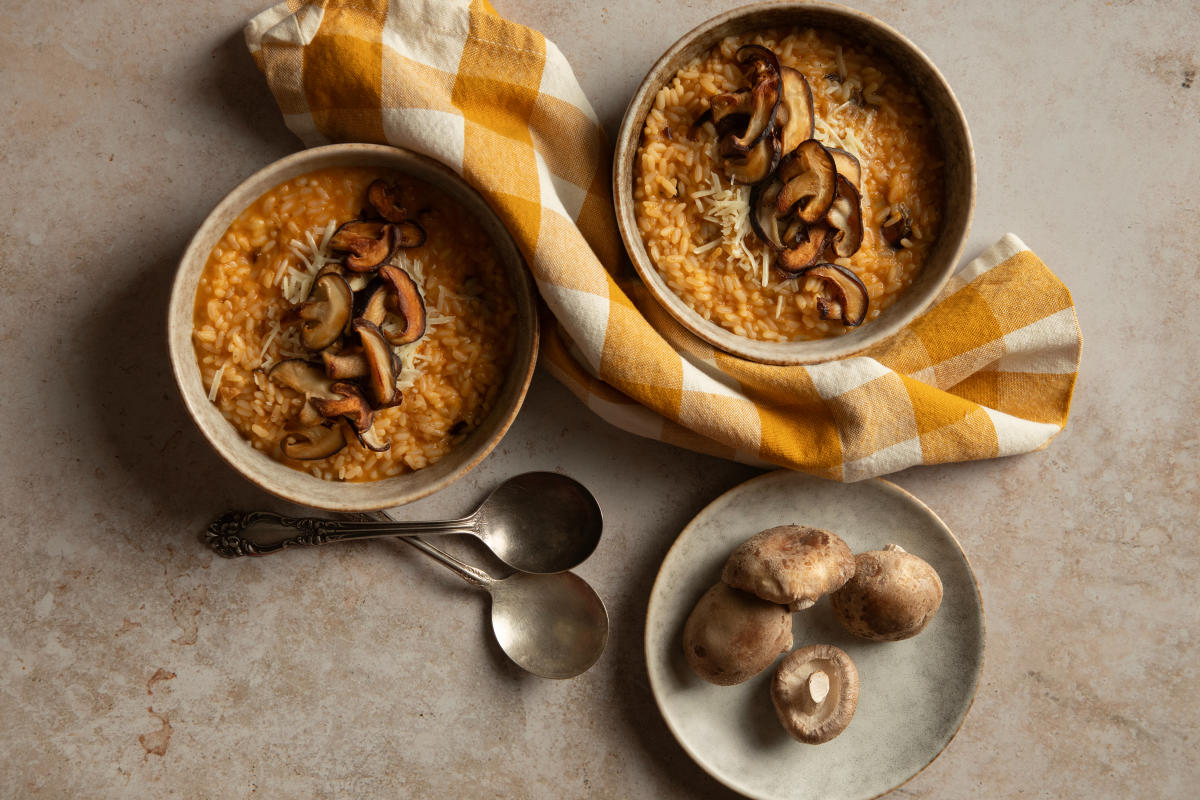
“We like to cook with ingredients from our weekly cornucopia of farmers’ market goodies,” says Amanda Powers of Enchanted Farms Mushrooms. “Chimayó chile is distinct and can often be found at the markets, hopefully next to some shiitake. The smoky, umami flavors coupled with the chile give the risotto a nice, familiar New Mexican taste.”
STOCK
- 6–8 cups water
- ¼ cup white wine
- 1 medium onion, peeled and halved
- 1 small tomato, halved
- 1 carrot, quartered
- ½ zucchini, halved
- ½ yellow squash, halved
- 1 leek, halved
- 1 thyme sprig
- 1 rosemary sprig
- 2 garlic cloves, peeled and crushed
- 1 bay leaf
- ¼ teaspoon celery seeds
- 2 whole black peppercorns
- 1 tablespoon salt
RISOTTO
- 2 tablespoons olive oil, plus more for browning shiitakes
- 2 small shallots, minced
- ¾ cup arborio rice
- 1 teaspoon pure red chile powder (Chimayó or ancho)
- 1 bay leaf
- 1 cup shiitake mushrooms, stemmed, caps thinly sliced
- 1 tablespoon heavy cream
- 1 tablespoon unsalted butter
- ¾ cup grated Parmesan cheese
- Salt and freshly ground pepper, to taste
Serves 4
1. Add all stock ingredients in a pot and bring to a gentle boil. After 40 minutes, strain the stock.
2. In a large saucepan over medium heat, heat oil and sauté shallots until translucent. Add arborio rice, chile powder, and bay leaf, stirring for 2 minutes.
3. Gradually add hot stock, ¼ cup at a time, stirring until absorbed. Repeat until rice is tender and the risotto mixture is creamy.
4. In a skillet, brown shiitake mushrooms in oil for 5 to 6 minutes. Combine the mushrooms, cream, butter, and Parmesan cheese with the prepared risotto. Season with salt and pepper before serving.
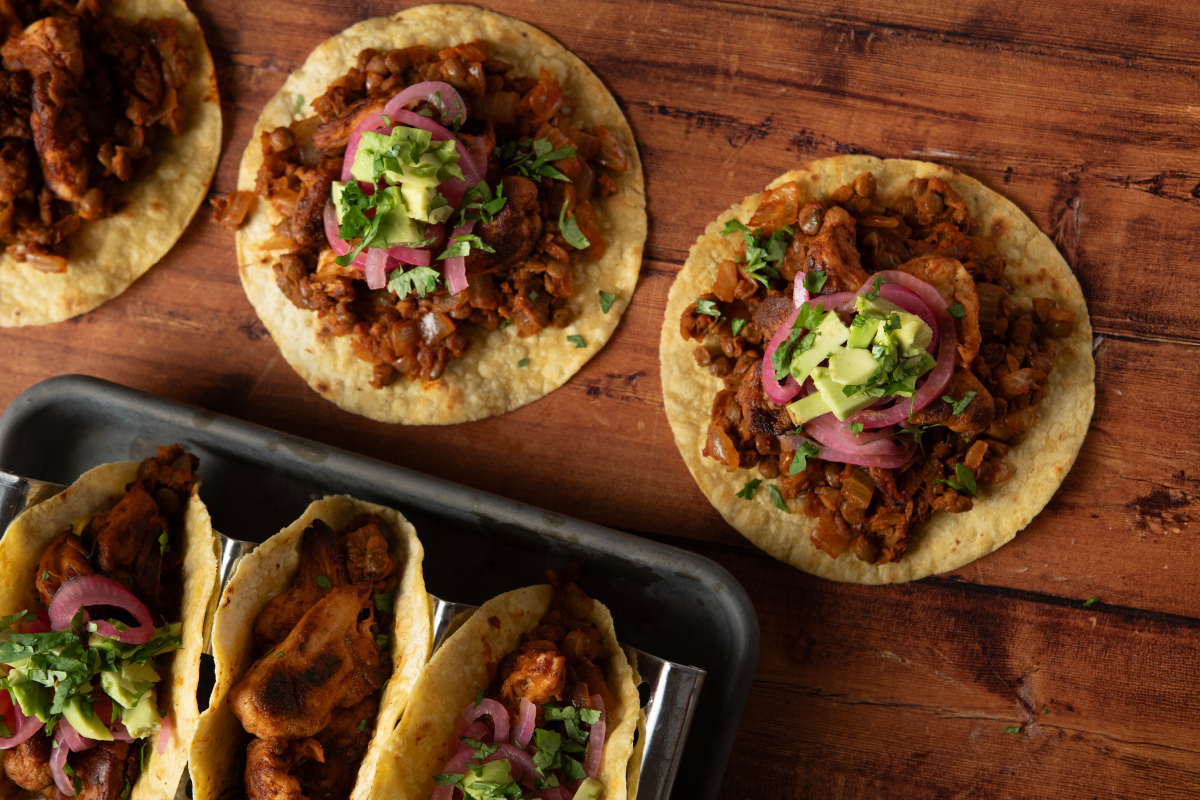
“This dish pairs the familiarity of barbecue with the health benefits of mushrooms,” says Full Circle Mushrooms owner Ximena Zamacona. With its chewy, spongelike texture, lion’s mane makes a great meat substitute and absorbs all the flavors of this delicious sauce.
- 1 can (15 ounces) brown or green lentils
- Neutral cooking oil, such as avocado or safflower
- 1 sweet onion, chopped
- 3 garlic cloves, minced
- 1 teaspoon chili powder
- 1 teaspoon cumin, plus ½ teaspoon
- 1 tablespoon soy sauce
- ½ tablespoon coconut aminos
- 8 ounces lion’s mane mushrooms
- 1 teaspoon smoked paprika
- 1 teaspoon garlic powder
- 1 teaspoon onion powder
- ½ teaspoon oregano
- ½ cup barbecue sauce
- 5 or more flour tortillas
- Optional toppings: avocado slices, cilantro, pickled red onions
Serves 5
1. Drain and rinse the lentils, set aside.
2. In a frying pan, heat a drizzle of oil and sauté the onion for about 3 minutes until fragrant. Add the garlic and cook for another minute.
3. Transfer lentils to the pan and add chili powder and 1 teaspoon of the cumin, tossing to coat evenly and toast the spices for 1–2 minutes.
4. Add the soy sauce and coconut aminos, and keep stirring until lentils are cooked through and most of the liquid is gone. Set the lentils aside and keep warm.
5. Trim off any hard woody stems of the lion’s mane and pull into small pieces with your hands.
6. In a large nonstick pan, heat about ½ tablespoon of oil over medium-high heat. When hot, toss in the shredded mushrooms, then add the paprika, garlic powder, onion powder, oregano, and remaining ½ teaspoon cumin, and stir to coat the mushrooms evenly and toast the spices.
7. Let the mushrooms brown on one side before flipping to brown on the other, about 3–4 minutes per side.
8. When mushrooms are golden brown, pour in the barbecue sauce and cook over medium heat until the sauce thickens and is mostly absorbed by the mushrooms.
9. Warm the tortillas and assemble tacos with lentil “meat,” BBQ lion’s mane, avocado, cilantro, and pickled red onions.