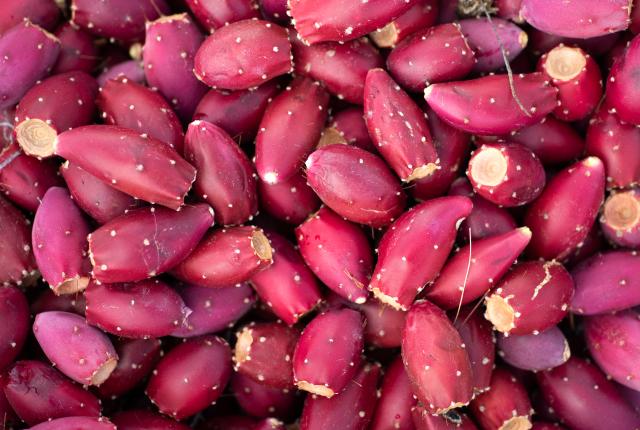
THE LATE-SUMMER BATTLE FOR prickly pears in my Albuquerque backyard is fierce. The purple fruits, perched like crowns atop spiny cactus pads, are icons of Southwestern landscapes and cuisine and a key food source for wildlife. But toiling against birds and squirrels for the pears is well worth the proverbial squeeze. Beneath their dusky skin lies a splash of sweet juice that does wonders to relieve the desert heat and a spoonful of brilliantly pink flesh that looks as vivid as it tastes.
“Prickly pear is so much more than just a color,” says Liz McKenzie, a Diné chef and co-founder of Prickly Foods, in Albuquerque, which offers prickly-pear-based lemonades, teas, and syrups. The fruits have a distinct flavor—some taste a bit like strawberry or watermelon, others hint at tart raspberry or even bubblegum. “It has this lovely and light flavor, like rain on the desert.”
Liz McKenzie, a Diné chef and co-founder of Prickly Foods, at the company’s farm in Lemitar.
McKenzie always had a jar of prickly pear jelly in the cabinet growing up, even though in Diné oral tradition, eating cactus is taboo. But during their culinary training, McKenzie learned that Diné herbalists and Hispanic curanderas have long eaten prickly pear and nopales (the cactus pads), using them medicinally for their antiviral, antioxidant, and blood-sugar-regulating properties. Reconciling with this complicated tradition has been an important part of McKenzie’s work. “It’s one of the things that makes me so proud of Prickly Foods,” they say. “It really showcases my love for New Mexico and for being Native.”
McKenzie isn’t alone in this prickly pear renaissance. Across the state, farmers, chefs, and makers are experiencing an uptick in interest for this vibrant, traditional ingredient.
“People just love it,” says Paula Padilla, owner of Zucchero Treats, an Albuquerque mobile dessert cart. She wasn’t aware prickly pear was edible until customers started asking for it. Now they can’t get enough of her prickly pear paletas and ice cream sandwiches. “Especially adults,” she says. “They’re expanding their taste buds and looking for these fun flavors.”
Harvest the fruit with metal tongs.
Will Thompson, founder of the New Mexico Prickly Pear Festival in Albuquerque, was noticing the same trend, but he also viewed the plant through the lens of climate resilience. With a background in agriculture, he recognized the potential of prickly pear cacti as a desert-hardy crop for an increasingly dry New Mexico. In 2018, with support from Albuquerque’s Three Sisters Kitchen, a nonprofit community kitchen that supports local food businesses and education, Thompson launched the festival as a kind of proof of concept. It was a hit.
As momentum built in 2021, Thompson reached out to McKenzie, a childhood friend, to co-create what became Prickly Foods. “He wanted me to spearhead recipe production and product development,” McKenzie says. The first product—prickly pear lemonade—remains one of their most popular offerings.
Destiny intervened again when a prickly pear farm in Lemitar, north of Socorro, came up for sale, and Thompson bought it. Today, the farm produces about 5,000 pounds of the fruit a year and represents one of just a handful of dedicated prickly pear farms in New Mexico and among only a few dozen in the United States.
Smoky prickly pear syrup is great in margaritas.
Harvesting, usually in early fall, is often a sweltering affair. Farmers wearing long sleeves and thick gloves tote five-gallon buckets and metal tongs. Despite the heavy gear and sharp spikes, Thompson says, collecting pears is not as dangerous, or difficult, as it seems.
“You’ll know they’re ripe when they’re dark, deep purple,” he says. If in doubt, peel back the skin with a pocketknife and taste for sweetness. Then all you do is twist them free of the pad with tongs. Whether harvested from a backyard, the wild, or a farm, it is important to wash the fruit to remove any potentially hazardous material (like bird droppings).
Next comes the tricky part—removing the spines and glochids, the thousands of tiny hairlike spines that cover both pears and pads. There are many strategies, but McKenzie recommends soaking them in cool water and then rinsing away the spines and repeating the process twice or more before juicing or freezing. If you’re making jam or jelly, be sure to remove the seeds—they’re hard enough to crack teeth.
If you’re not quite ready to brave the harvest yourself, the New Mexico Prickly Pear Festival offers a safe and delicious entry point. Held each September at the Gutiérrez Hubbell House, in Albuquerque, the fest is a chance to taste, learn, and connect.
“I wanted to show farmers, ranchers, gardeners, food businesses, home cooks, and chefs that they could use native plants like prickly pear,” Thompson says. He also wanted everyday New Mexicans to realize that something delicious was growing, quite literally, all around them. The festival has inspired increasingly imaginative prickly pear products each year, from prickly-pear-infused cold brew coffee and spice blends to gochujang and crème brûlée, as well as the more familiar jams, jellies, syrups, and beverages.
“I grew up eating prickly pear and drinking hibiscus tea,” says Mereya Blanco, a Burqueño with Spanish and Indigenous roots and co-owner of Midnight Disco Fungi. She’s used prickly pear in a number of festival products, including a prickly pear green tea blend. “It was really cool to get to integrate our cultures into something that we can all drink and share.”
In addition to food, the festival features talks and demonstrations on cultural, medicinal, and even artistic uses, like prickly pear’s role as a textile dye. The fruit is also inspiring local food leaders to increase their focus on flavors native to the region.
Three Sisters Kitchen continues to spearhead this work, in part by hosting community cooking demonstrations on how to process and use prickly pear and other local foods. “Prickly pear is super delicious in vinaigrettes and marinades, and even granola,” says executive director Anzia Bennett. But on a deeper level, she reflects, prickly pear is more than just a tasty ingredient. It’s a symbol of survival in our desert home. “It reminds us that this place has what we need in order to feed ourselves and each other.”
Sarah Mock recommends using duct tape to remove stubborn prickly pear glochids from fingers after harvesting.
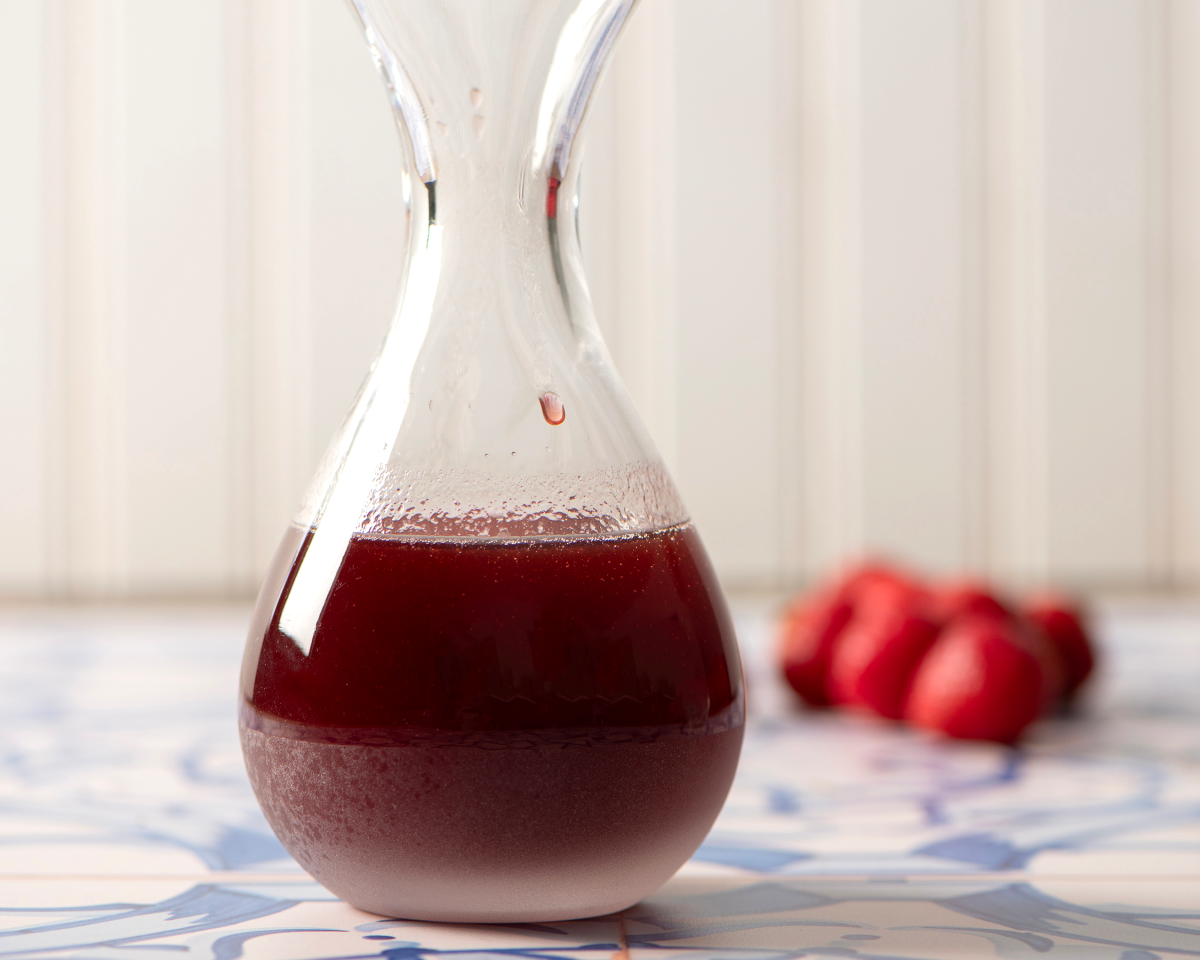
SMOKY PRICKLY PEAR SYRUP
While there are many ways to remove prickly pear spines, this method of roasting them over an open flame will also infuse a smoky flavor. If you harvest your own, make sure that the plant is growing in an area away from roads or where chemicals might have drifted onto plants. Wear gloves, long pants and long sleeves, and use metal tongs to avoid getting poked.
- 8–10 ripe prickly pear fruits
- 1 cup water
- ½ cup sugar
Makes 1 cup
1. Hold each prickly pear with tongs or a fork and rotate it over an open flame for about 5–10 seconds. Rinse the roasted pears under cool water to ensure all the spines are gone.
2. Heat water in a saucepan over medium heat. Halve the fruits and scoop out the pulp and seeds. Add this to the water and simmer for 30 minutes.
3. Using a fine-mesh strainer, separate and discard the pulp and seeds from the prickly pear juice. Rinse the pan.
4. Return juice to the pan and add the sugar, heating on low and stirring until dissolved. Do not boil. Once the sugar is dissolved, remove from heat and cool. (When it’s cool, additional ingredients like citrus juices can be added for more flavor and sweetness.) Store in the refrigerator in an airtight container for up to 6 months.
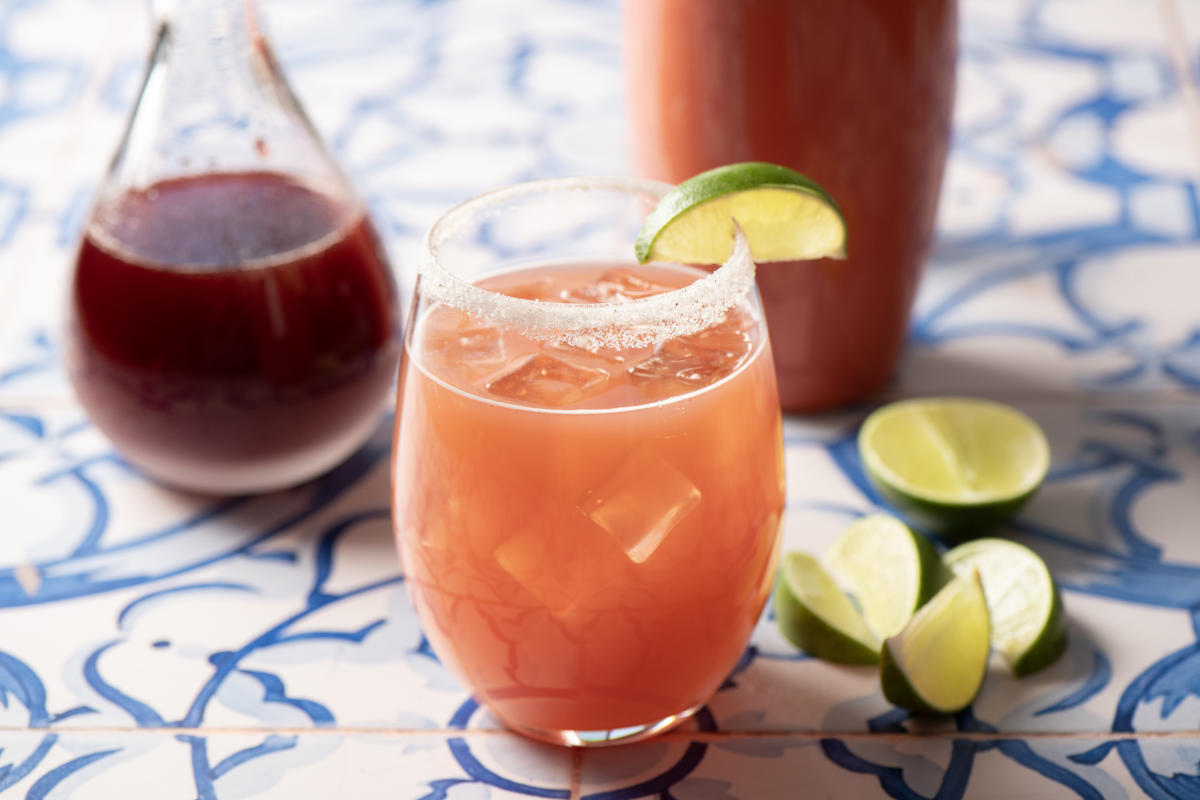
PRICKLY PEAR MARGARITA
Three Sisters Kitchen’s cafe manager Alex Innis says the mocktail version of this drink is his favorite summer refresher.
- 1 tablespoon coarse salt (optional)
- 1 tablespoon sugar (optional)
- 1 lime, cut into wedges
- Ice
- 2 ounces water (or 3 ounces if not using tequila)
- 1 ounce prickly pear syrup
- 1 ounce lime juice
- ½ ounce orange juice
- ½ ounce agave syrup
- 1 ounce tequila (optional)
Makes 1 serving
1. If preparing a rimmed glass, thoroughly mix salt and sugar until combined and pour onto a small plate. Rub a lime wedge around the rim of a glass and dip it into the mixture. Spin glass until the rim is fully coated, set aside.
2. Fill a cocktail shaker halfway with ice and add in the water, prickly pear syrup, lime juice, orange juice, agave syrup, and optional tequila. Shake for 15 seconds or until the outside of the shaker gets cold to the touch. Strain margarita into a glass filled with fresh ice, garnish with a lime wedge.
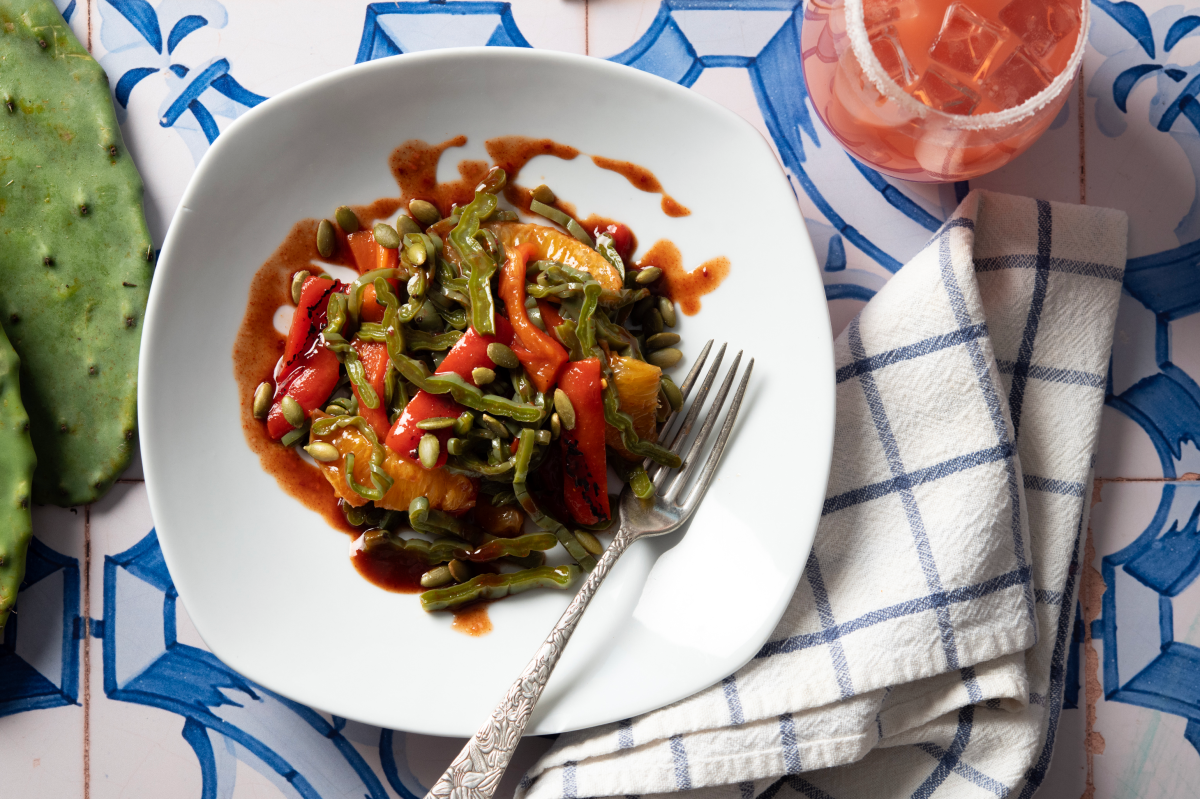
NOPALES SALAD
This salad, originally prepared for the New Mexico Prickly Pear Festival by Lois Ellen Frank and Walter Whitewater of Red Mesa Cuisine, in Santa Fe, uses the pads of a prickly pear cactus. See their demonstration at nmmag.us/nopales-salad.
- 4 large nopales (cactus pads)
- 2 red bell peppers
- 6 large oranges
- 3 tablespoons balsamic vinegar
- 2 tablespoons low-sugar organic raspberry jam
- 1 teaspoon Dijon mustard
- ½ teaspoon salt
- ¼ teaspoon black pepper
- 1 teaspoon red chile powder
- ¼ cup pumpkin seeds, lightly toasted
Serves 6
1. Clean cactus pads with the unsharpened side of a cutting knife, removing any spines or other imperfections. Remove the bottom and outer edges of the cactus where it was attached to the plant and where the edge spines are the longest. Rinse under cold water and wipe the pads with a paper towel.
2. Slice pads into matchstick strips about 3 inches in length. Blanch the strips in boiling water until they turn bright green, approximately 1–2 minutes. Place in an ice water bath to stop the cooking process. Rinse thoroughly in cold water until the gum washes off the pads; drain well.
3. Roast whole peppers on an open flame until blackened all the way around. Place in a covered bowl to cool. Once cooled, remove the blackened skin and seeds by hand. Rinse the pepper in cold water to ensure all skin and seeds are removed. Cut into 3-inch strips.
4. Remove the top and bottom of the oranges, then cut away the remaining skin, leaving the fruit flesh intact. Segment the oranges with a paring knife, following the natural segments.
5. In a bowl, toss together the oranges, cactus pad strips, and red pepper strips.
6. For the dressing: In a small bowl, whisk together vinegar, raspberry jam, mustard, and spices (add additional jam for more sweetness). Add a splash of water to thin to desired consistency. Pour the dressing over the salad, toss, and garnish with the toasted pumpkin seeds. Drizzle a little salad dressing around the cactus pad salad.
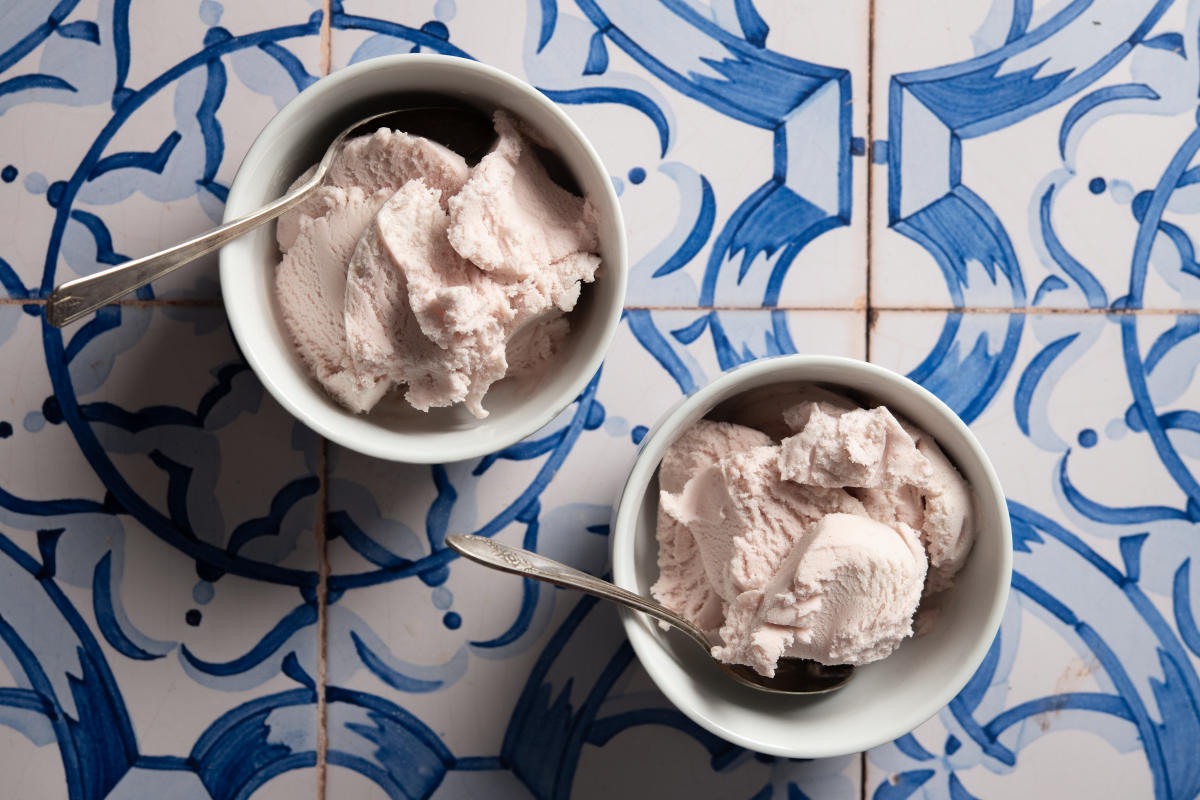
PRICKLY PEAR ICE CREAM HACK
Liz McKenzie, who, in addition to Prickly Foods, owns custom cake-making outfit Howdy Cakes, gives their ice cream a pop of color and flavor with this easy hack.
- 1 pint of vanilla ice cream
- ⅓ cup prickly pear syrup or juice
Makes 1 pint
Soften the ice cream on the counter to scooping consistency (about 10–20 minutes). Add ice cream and prickly pear syrup or juice to a blender; pulse to incorporate. Store mixture in a cold-safe container and return to the freezer if a firmer consistency is desired.